company / press
Everything you need to write about Kehai.
The fact sheet, the sentences, the pictures, and the film, free to quote as written. One archive holds all of it, the logo included.
01
The press kit
One archive: the fact sheet, the tagline, the four descriptions, the lockup and the mark in SVG and PNG on dark and light, eight screenshots at 2400 pixels, and the film's poster. It is built from the same file this page prints, so the archive cannot disagree with it.
02
Fact sheet
The answers a directory form or a journalist asks for, in the order they ask. Prices and capacities are read from the same price book the panel charges from.
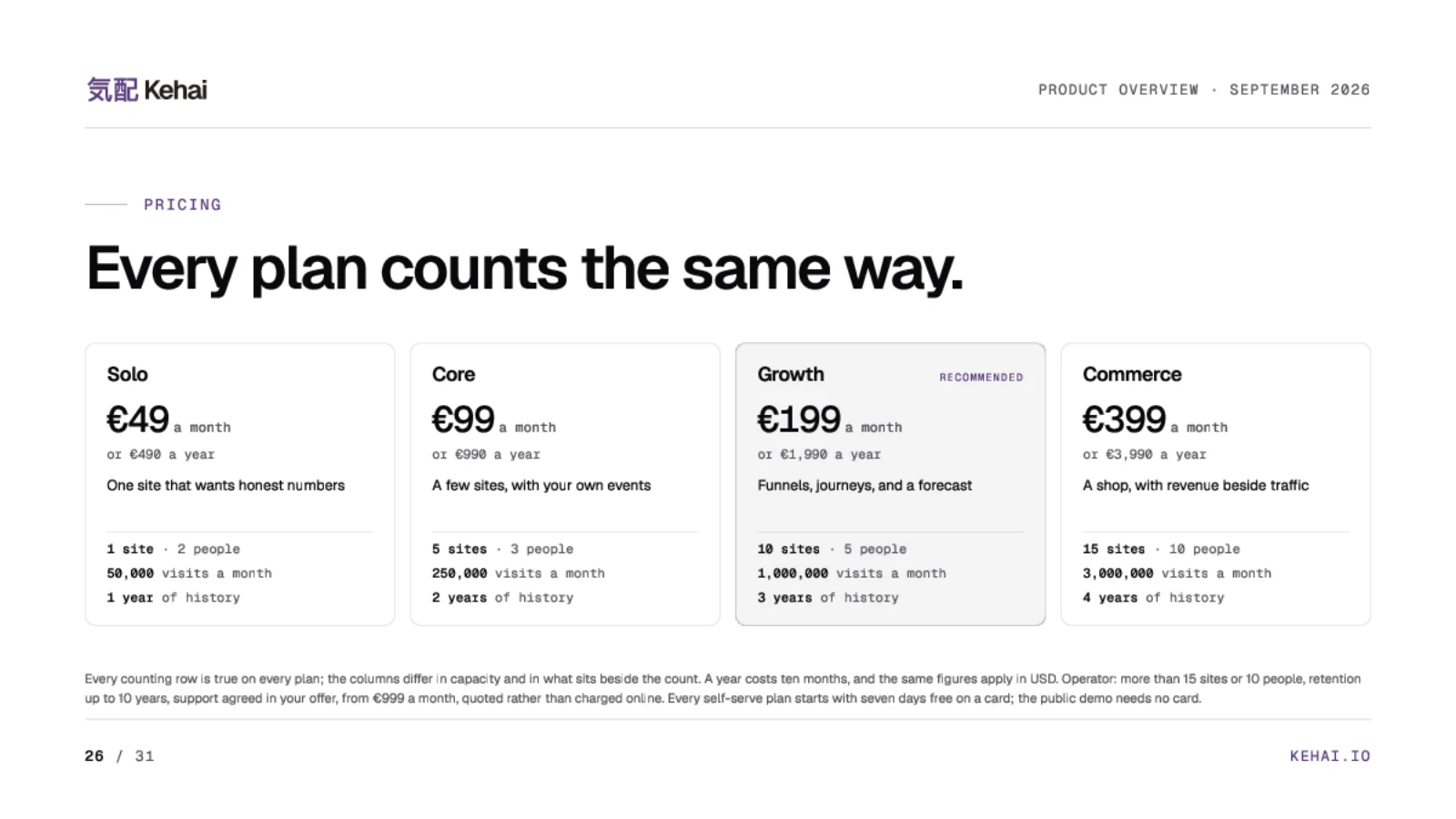
- Solo: €49 a month or €490 a year, 1 site, 2 people, 50,000 visits a month, 1 year of history
- Core: €99 a month or €990 a year, 5 sites, 3 people, 250,000 visits a month, 2 years of history
- Growth: €199 a month or €1,990 a year, 10 sites, 5 people, 1,000,000 visits a month, 3 years of history
- Commerce: €399 a month or €3,990 a year, 15 sites, 10 people, 3,000,000 visits a month, 4 years of history
03
The sentences
The tagline, and four lengths of the same description. The short and medium ones are written to the limits software directories impose, and the counts beside them are measured, so a field that says 160 takes the medium one whole. Quote them as written.
Web analytics without the noise.
the tagline · with the period, never paraphrased
Web analytics without cookies, hosted in the EU.
A directory tagline field or a search result title.
Kehai counts every visit without cookies or browser storage, keeps the rule beside each number, imports GA4 history, and runs on its own hardware in Warsaw.
A meta description or a directory summary.
Kehai is privacy-first web analytics, built in Warsaw. Its tracker uses no cookies or browser storage, with visitor and visit codes scoped to one site and one UTC day for new measurements. Reports distinguish counted traffic, source-labeled imports, and modeled forecasts. Analytics is hosted in the EU, and authorized users can export retained data at no extra cost.
The one paragraph for articles, talks, panels, and decks.
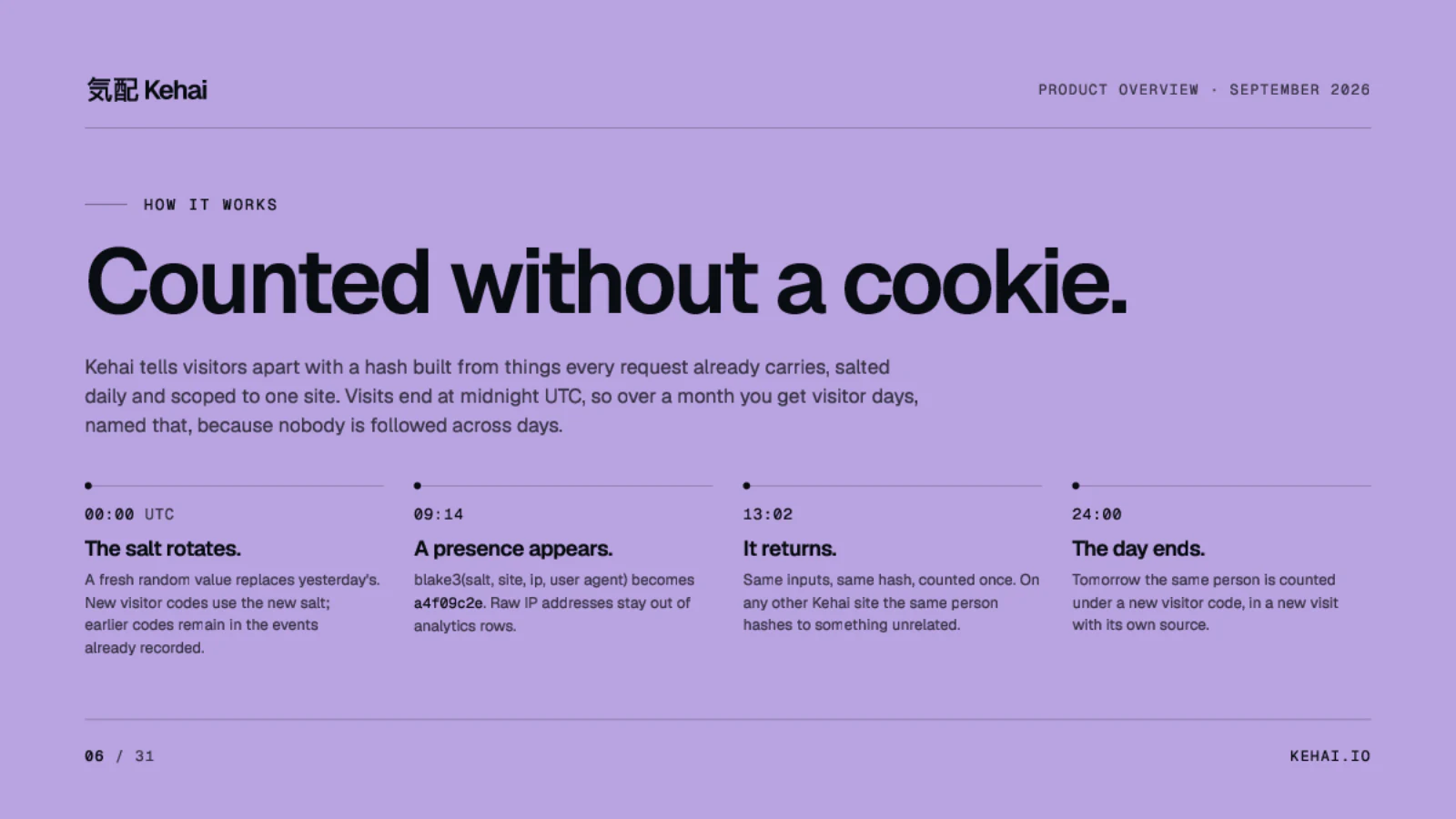
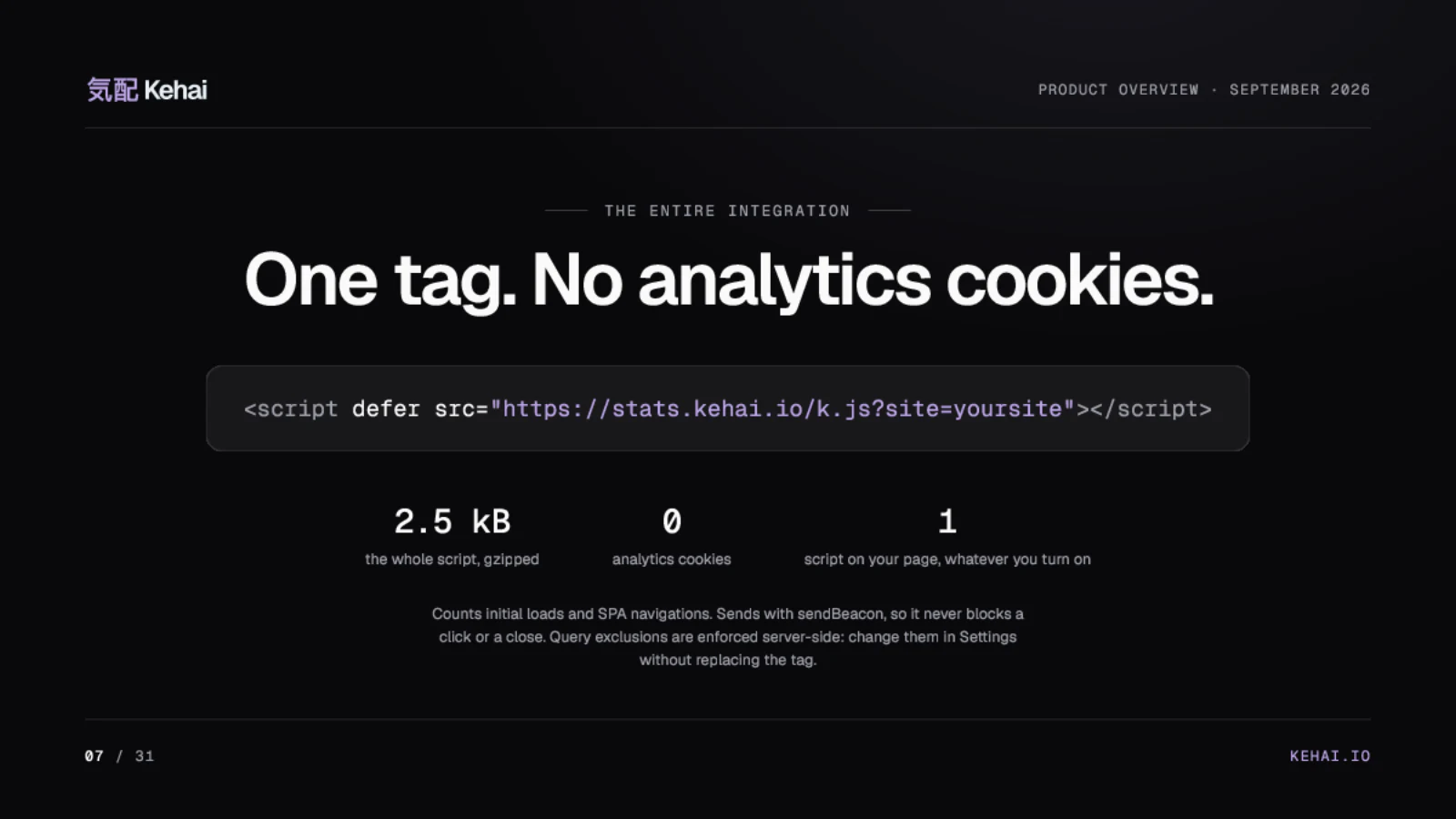
Kehai is web analytics for people who run websites and online stores and need numbers they can defend. The tracker sets no cookie and writes nothing to browser storage; visitor and visit codes are salted hashes scoped to one site and one UTC day. Nothing is sampled, thresholded, or modeled into a measured figure, and every count carries the rule that produced it, including a bot ledger and AI assistant traffic counted apart. History from GA4, Plausible, or Umami imports with its source labeled, forecasts and pacing targets stay separate from measured data, and ecommerce revenue arrives from the server, with refunds and currencies handled, through Stripe, WooCommerce, PrestaShop, Wix, or Squarespace. Every dataset is available over REST and an MCP server, and the whole site exports as one file. Kehai runs on hardware managed in Warsaw under EU law, publishes its data processing agreement and subprocessors, and is funded by subscriptions rather than by anything it learns about visitors.
The full listing text for a software directory.
04
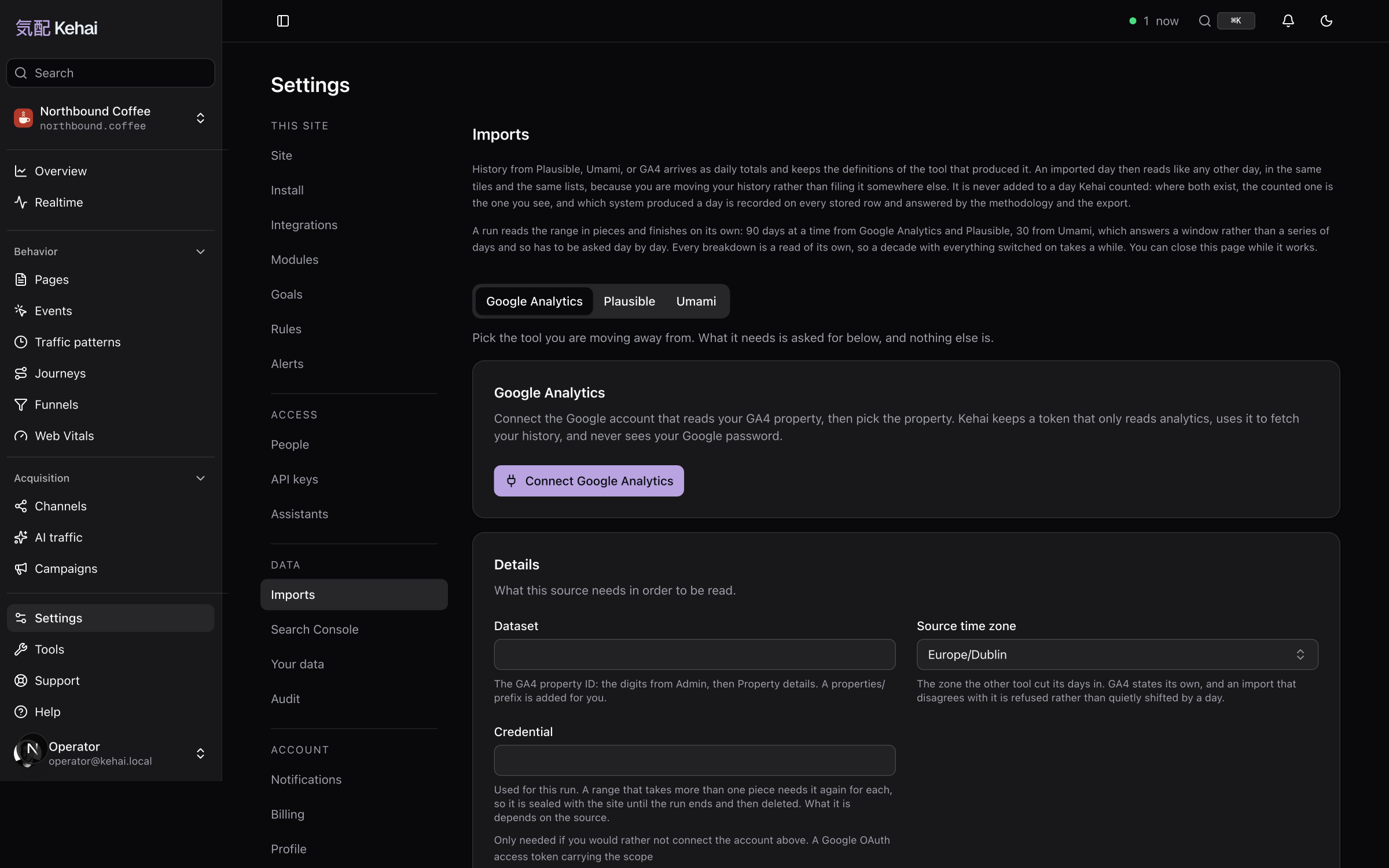
Screenshots
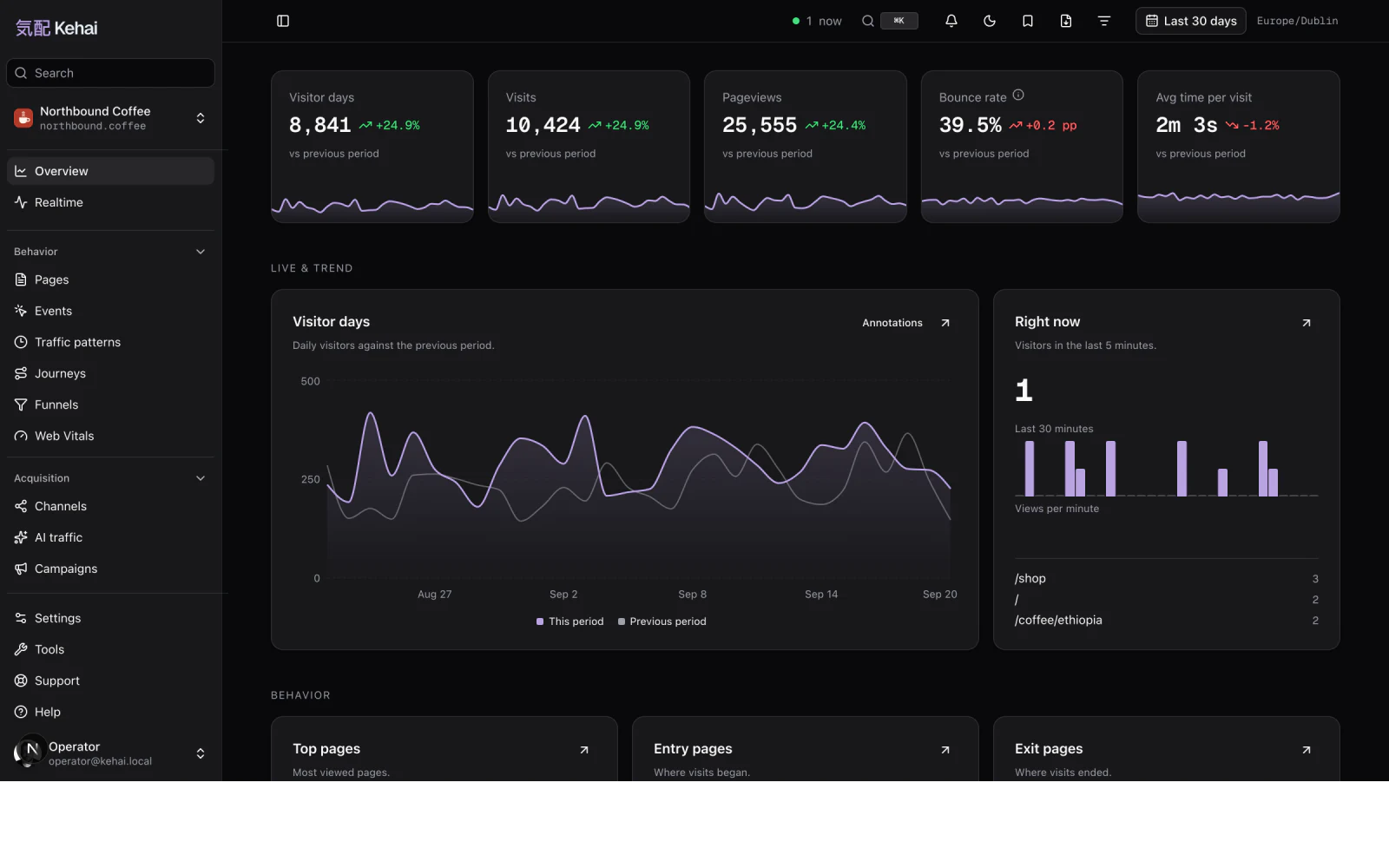
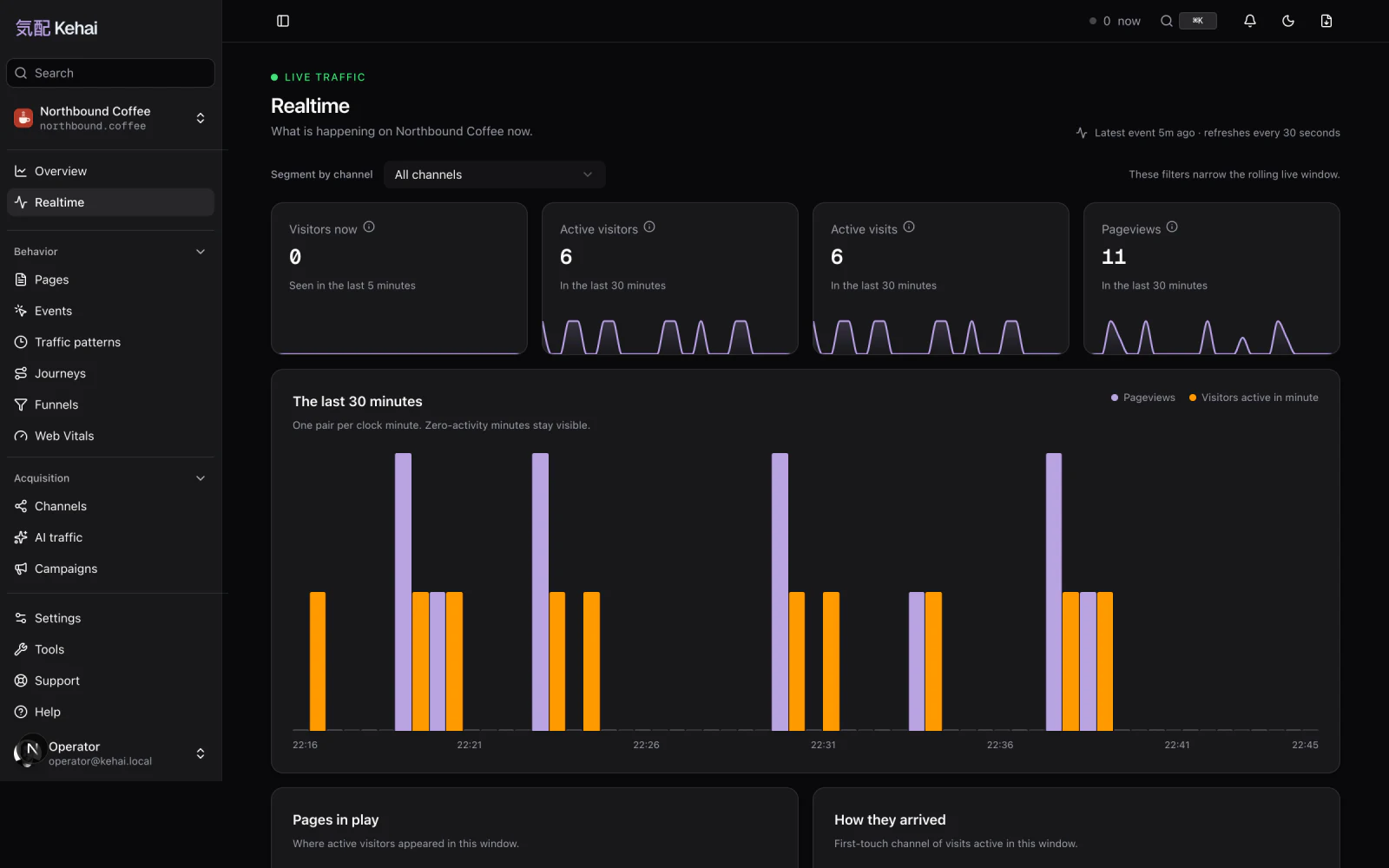
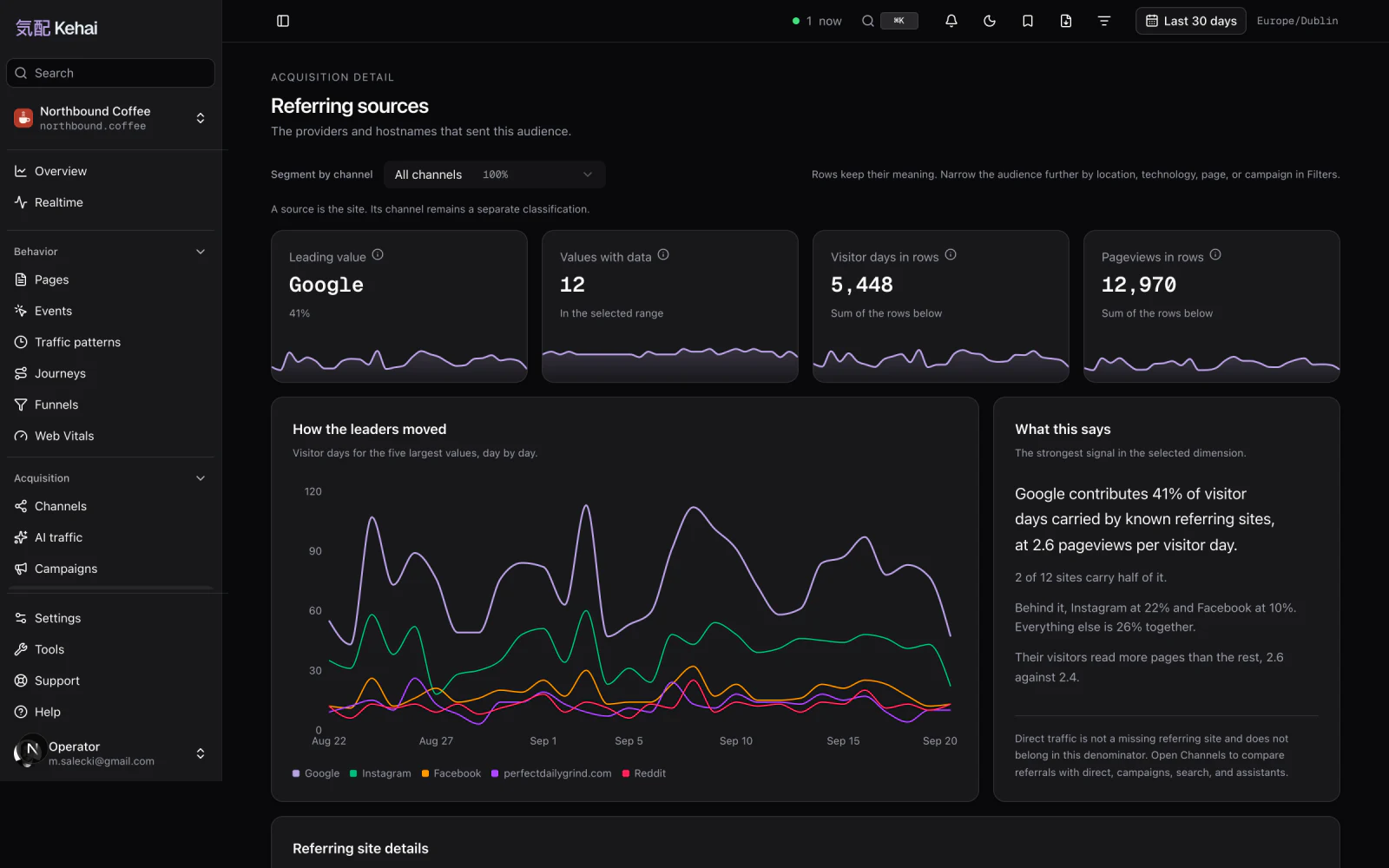
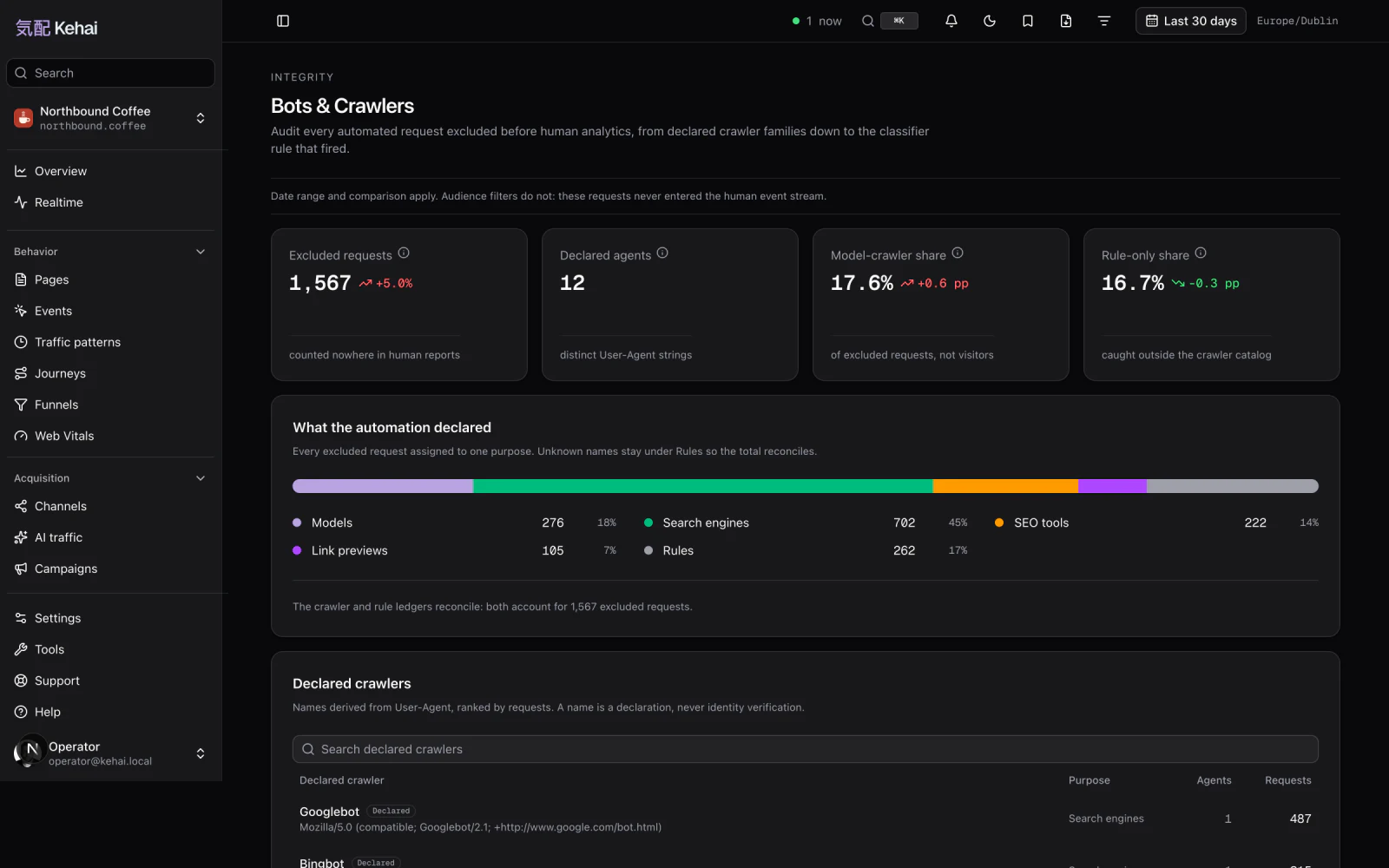
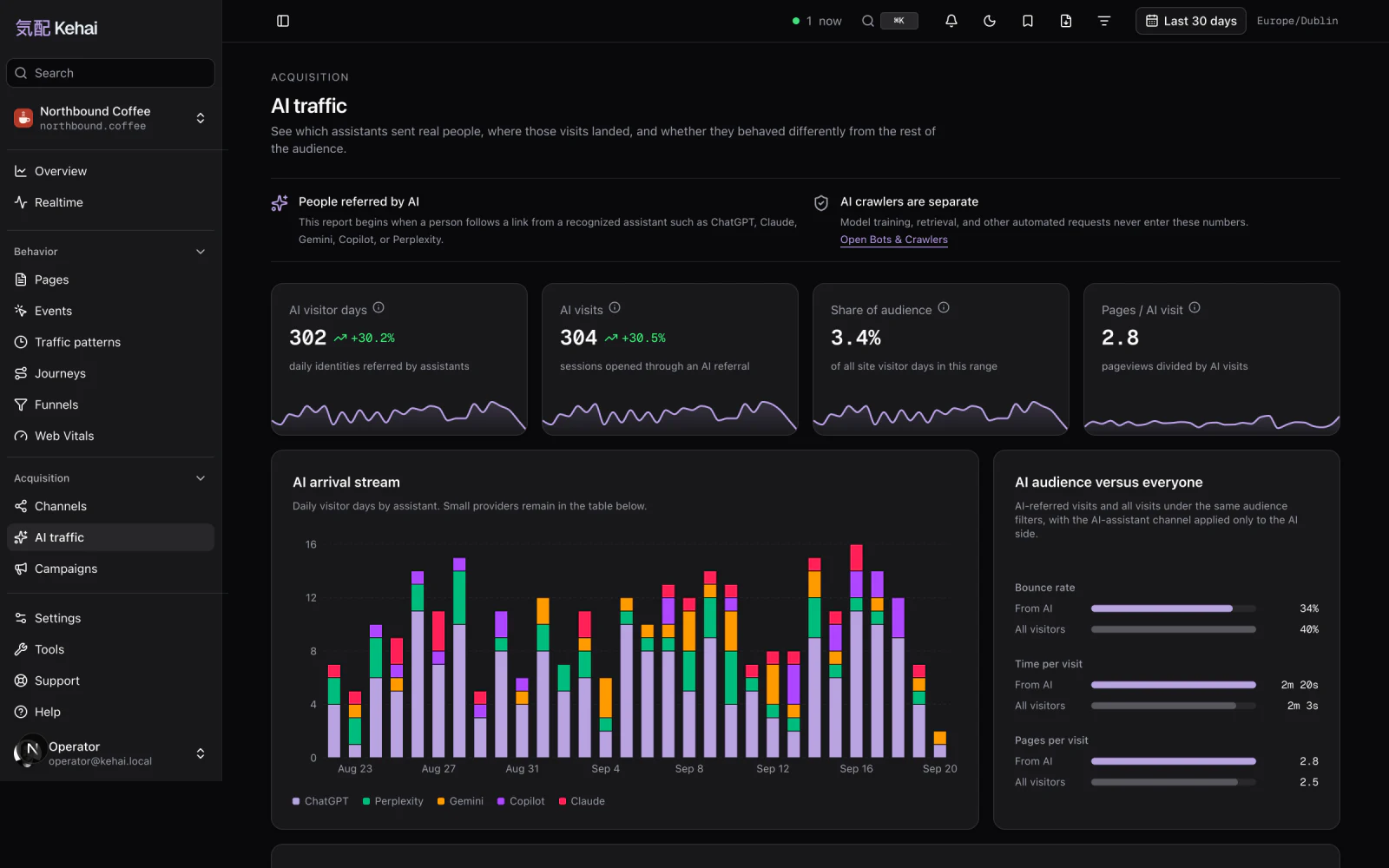
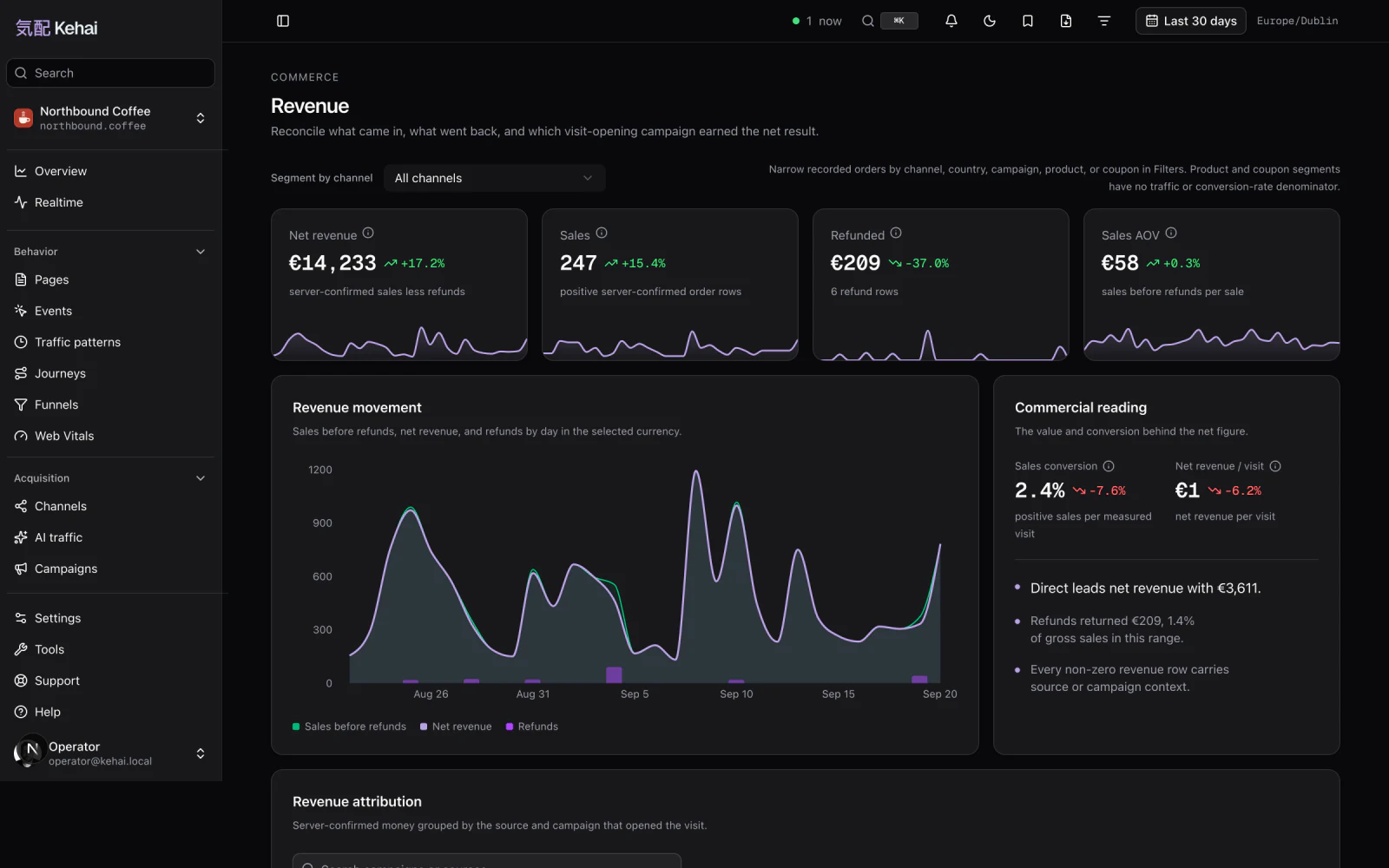
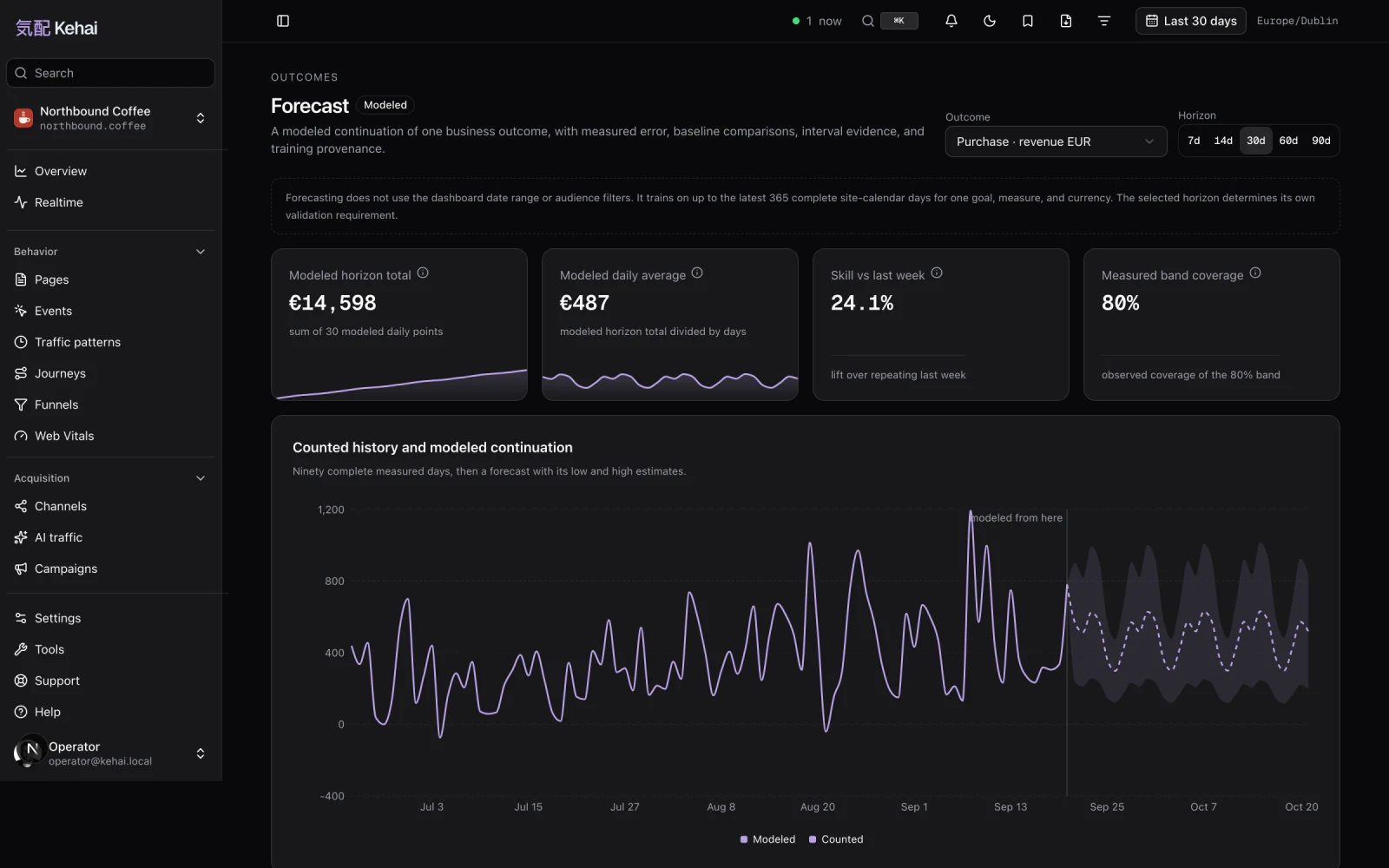
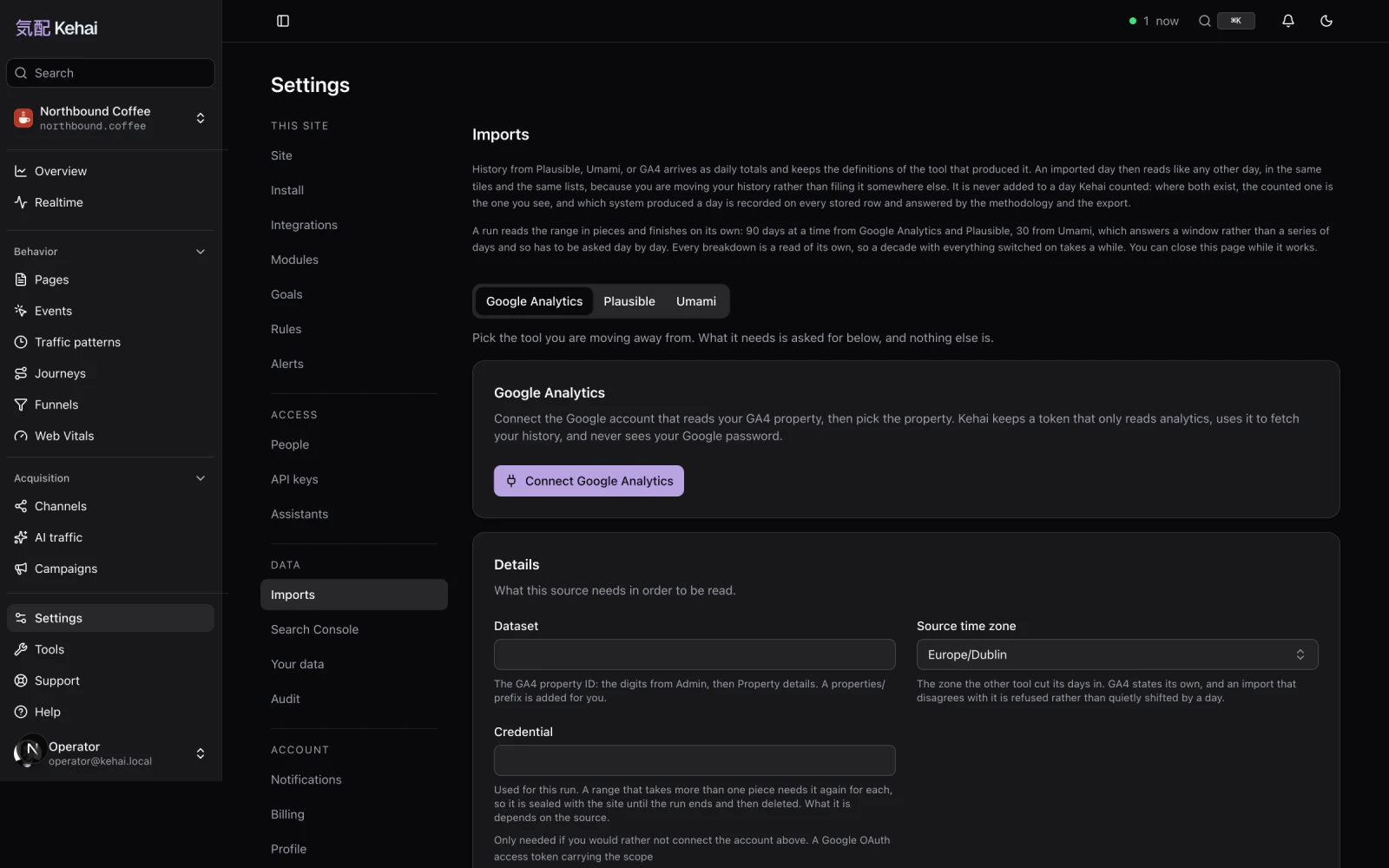
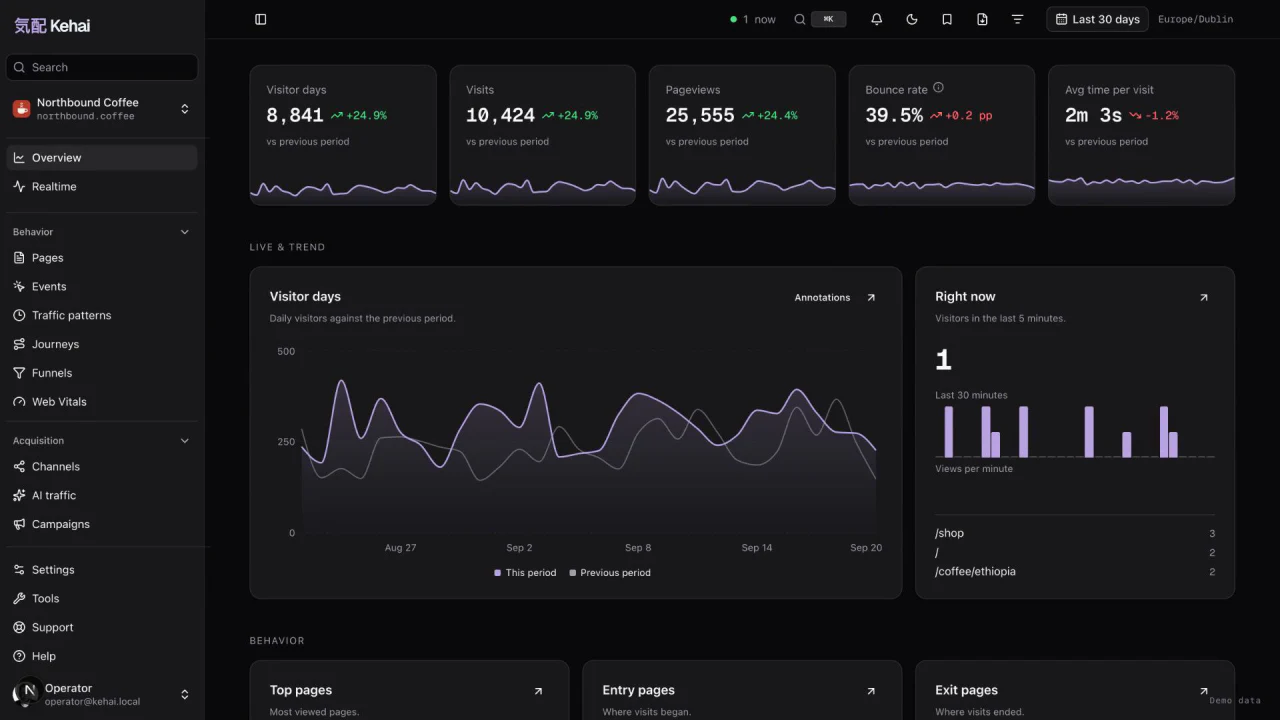
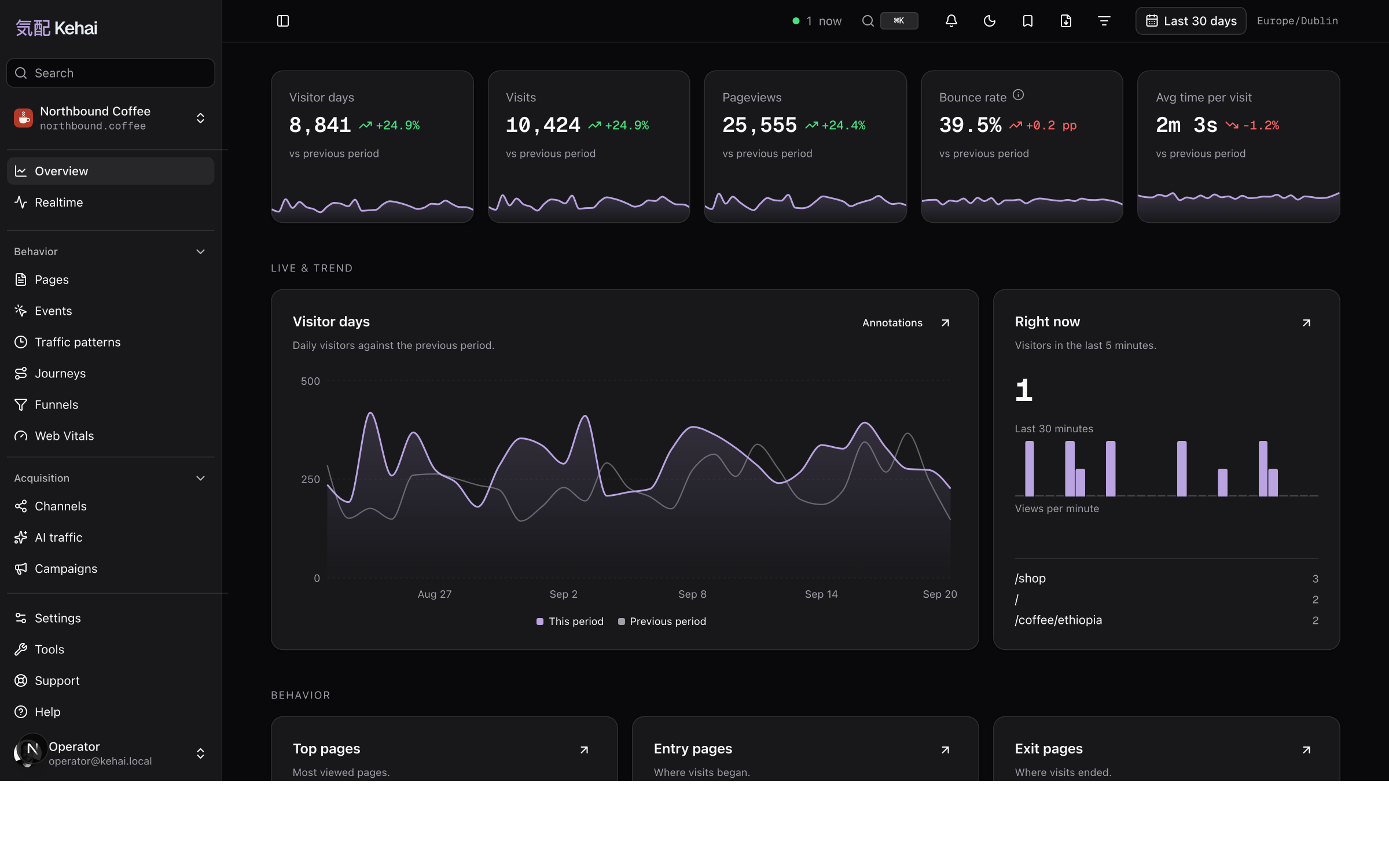
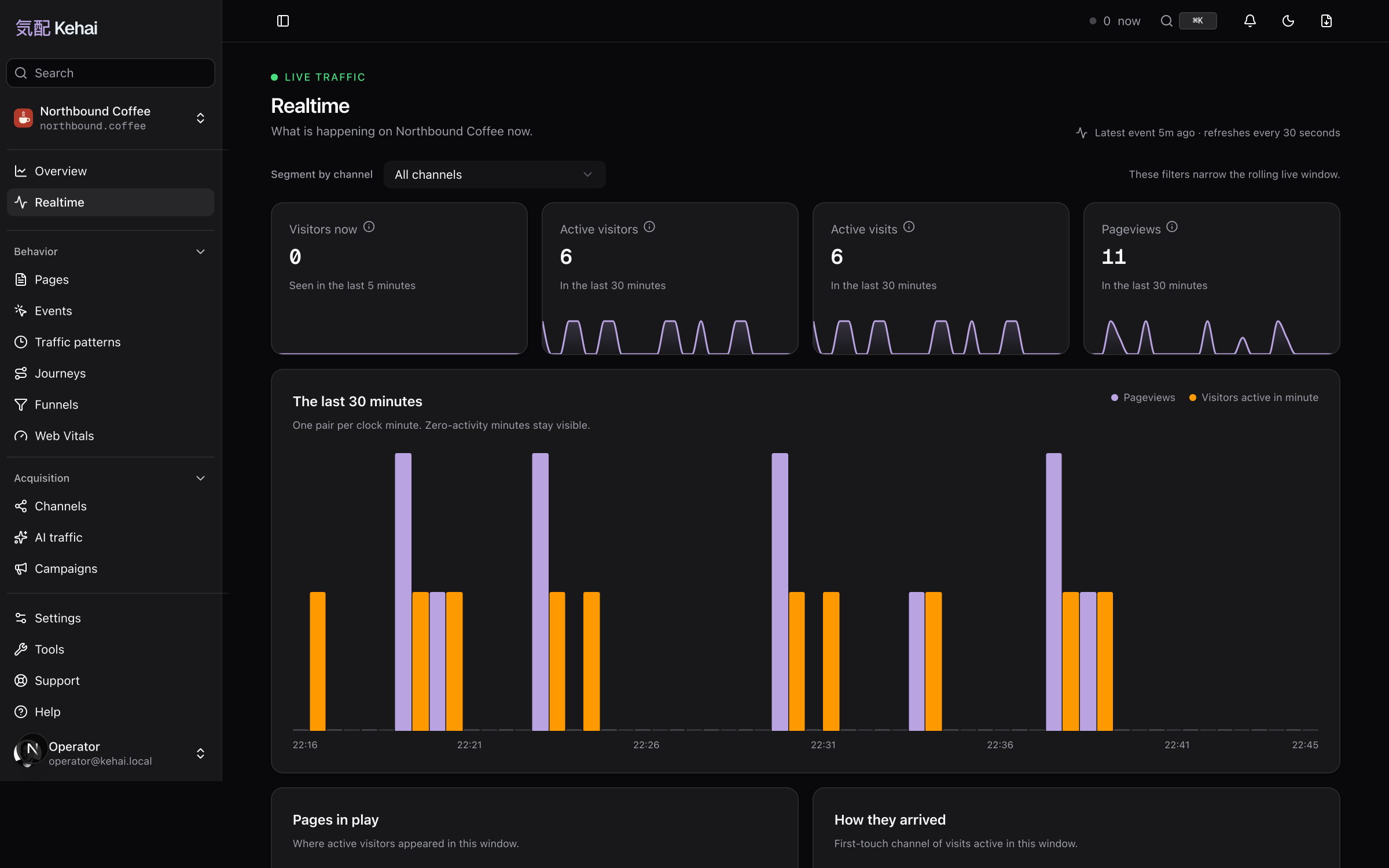
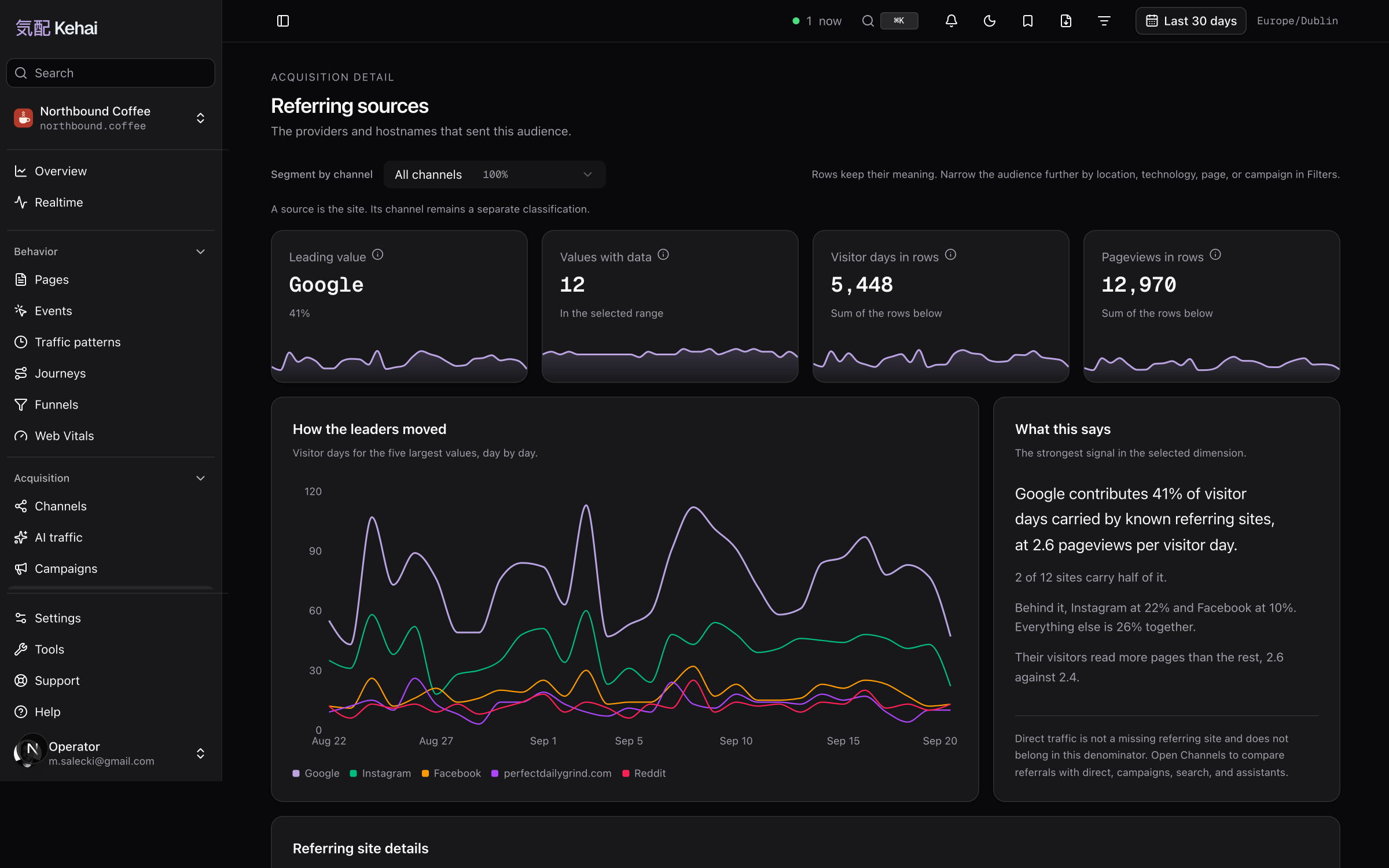
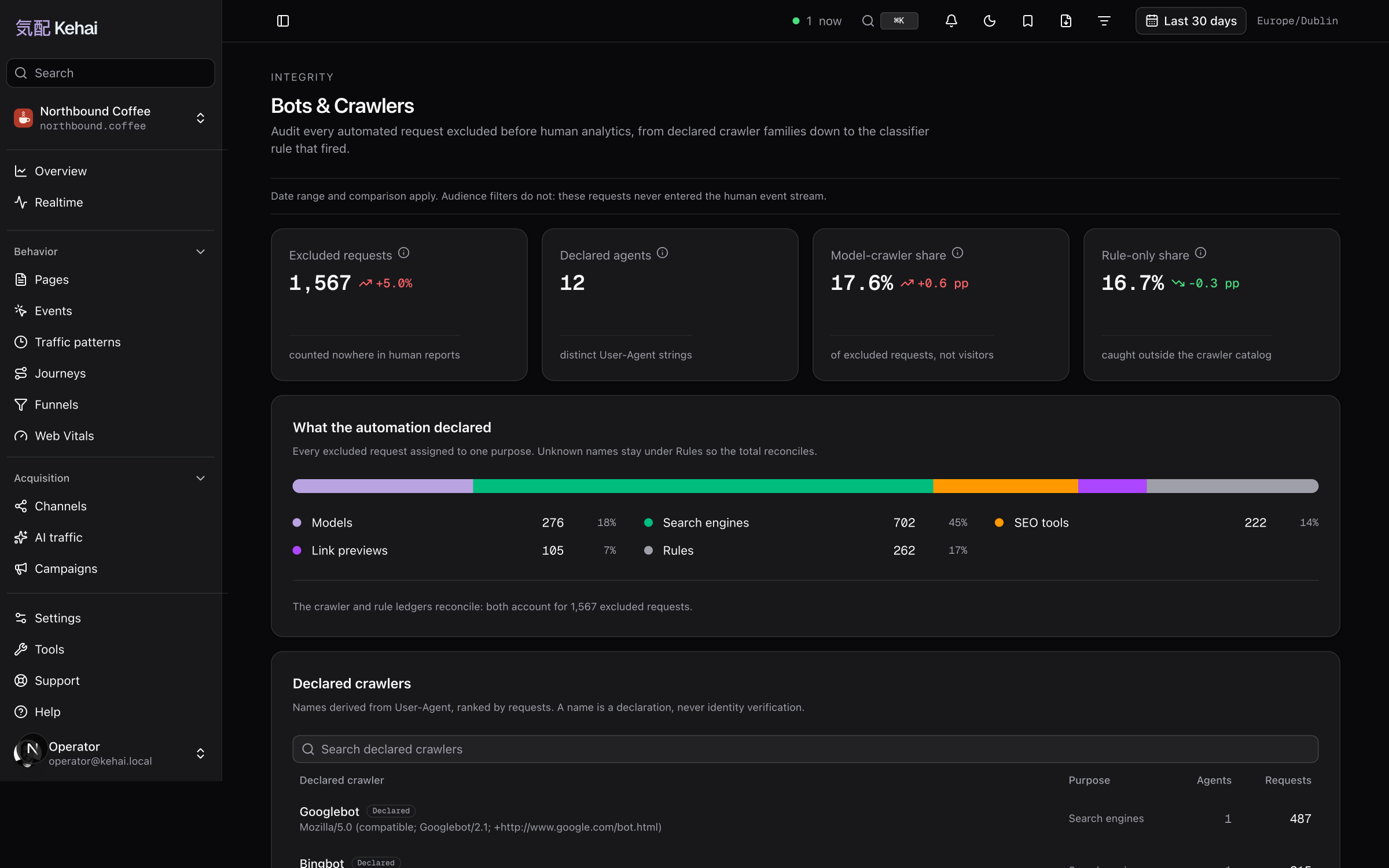
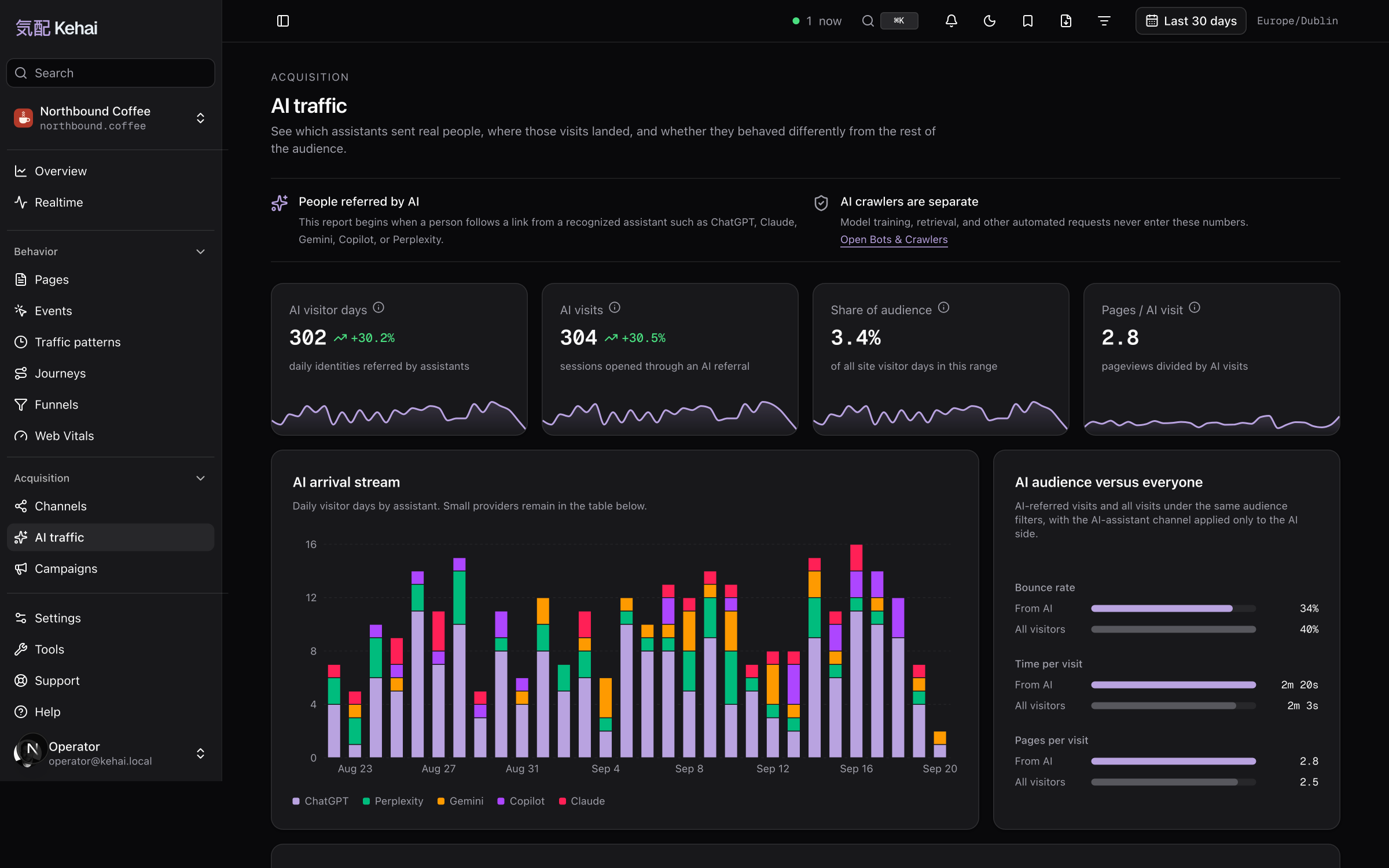
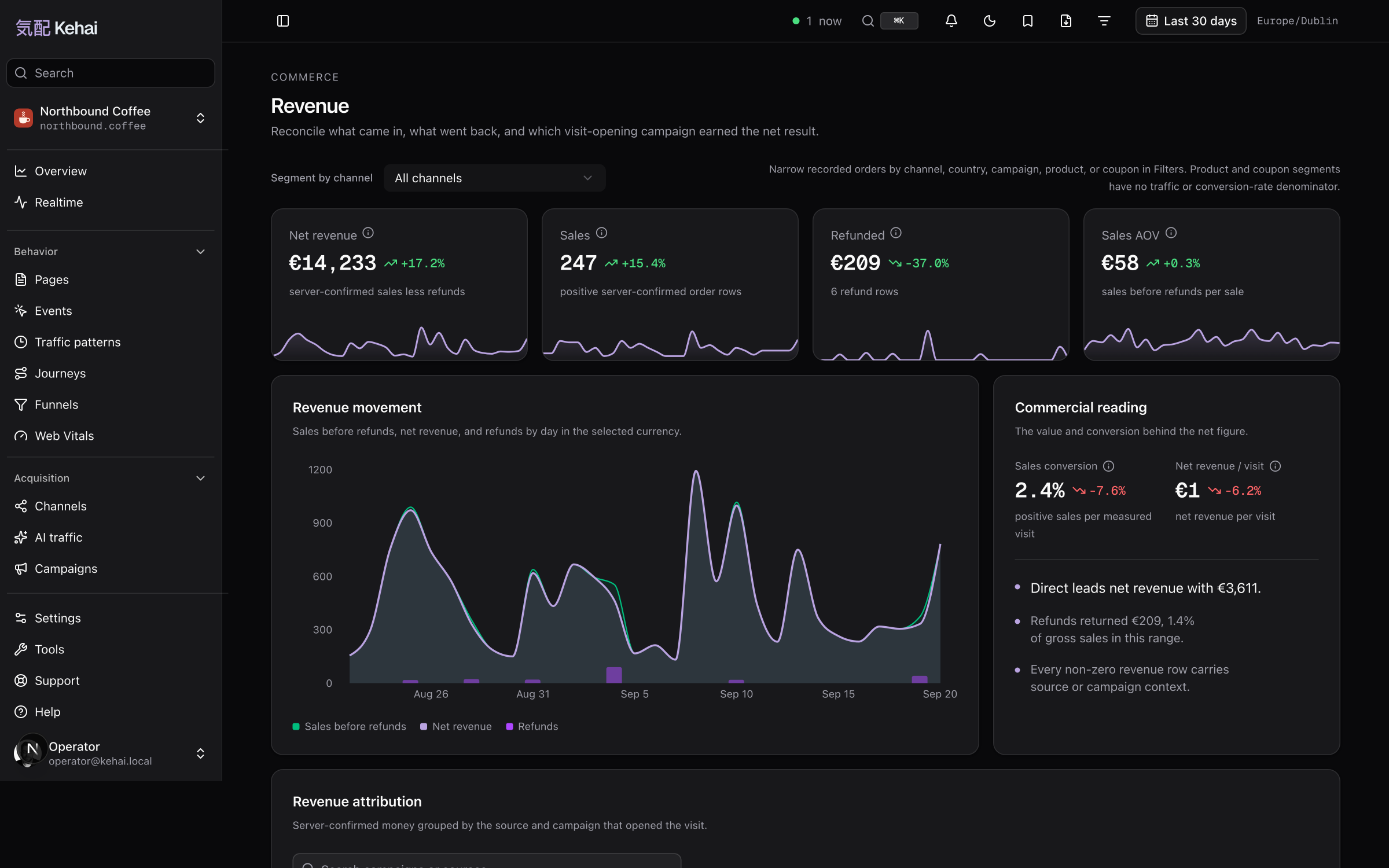
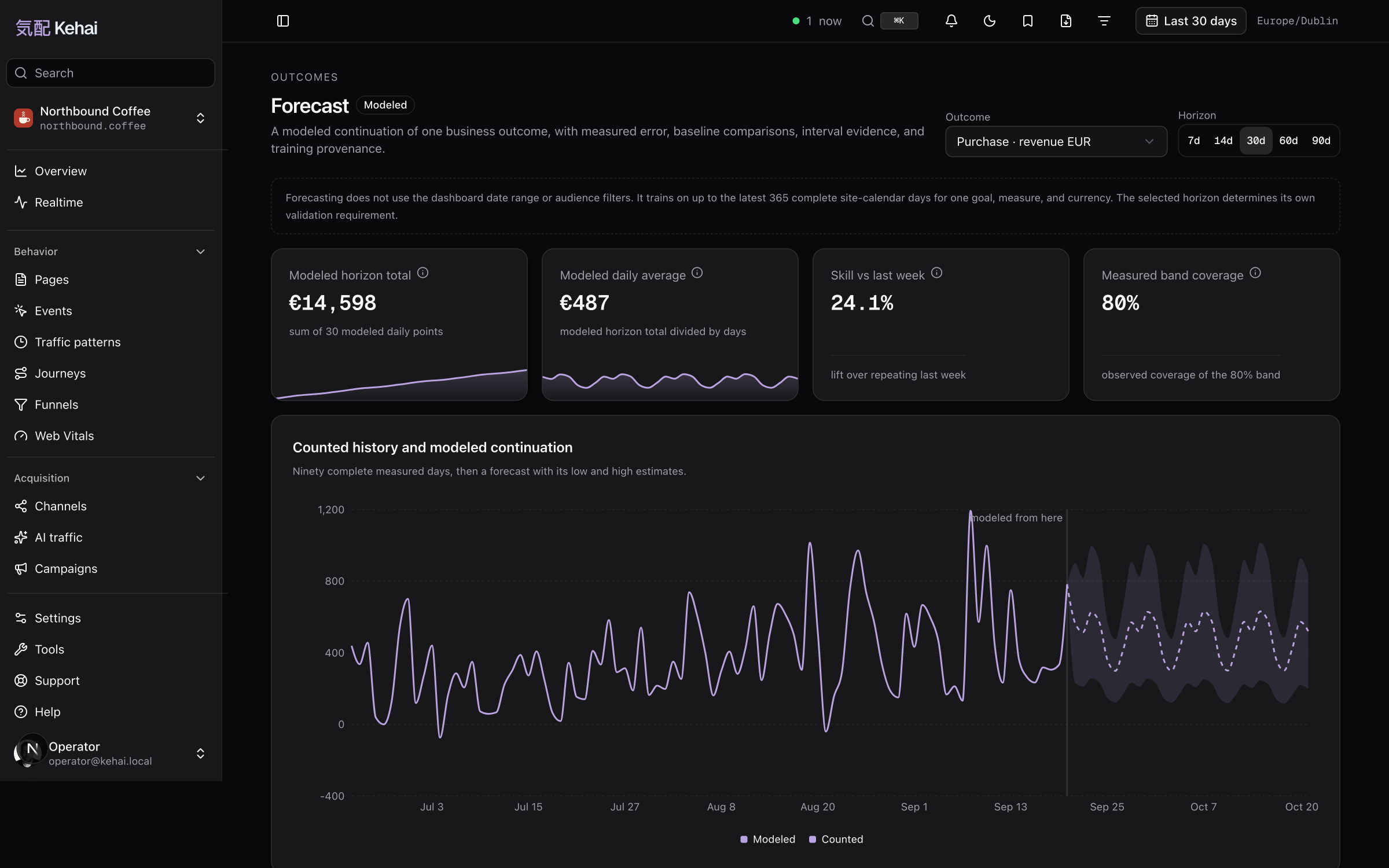
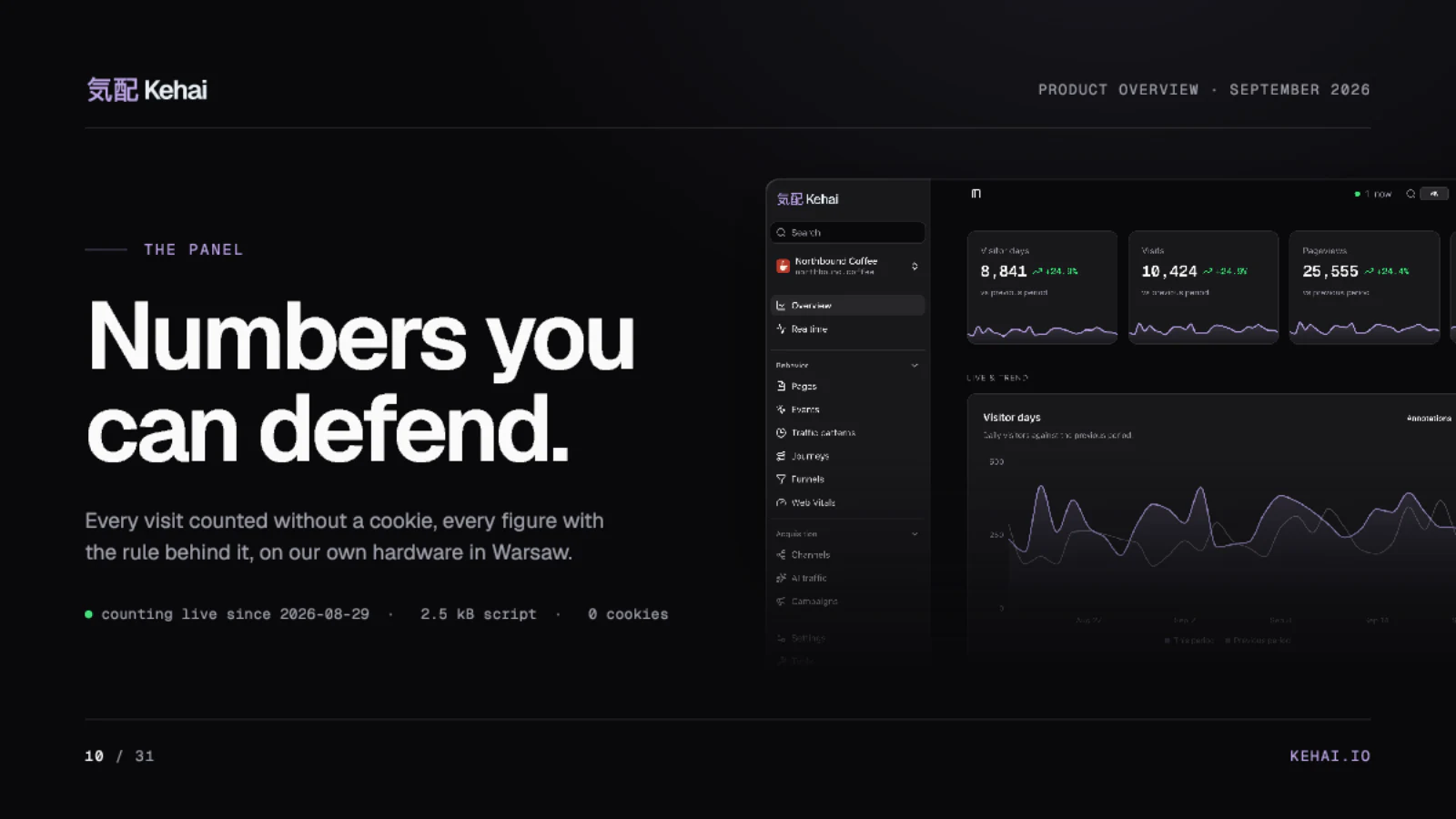
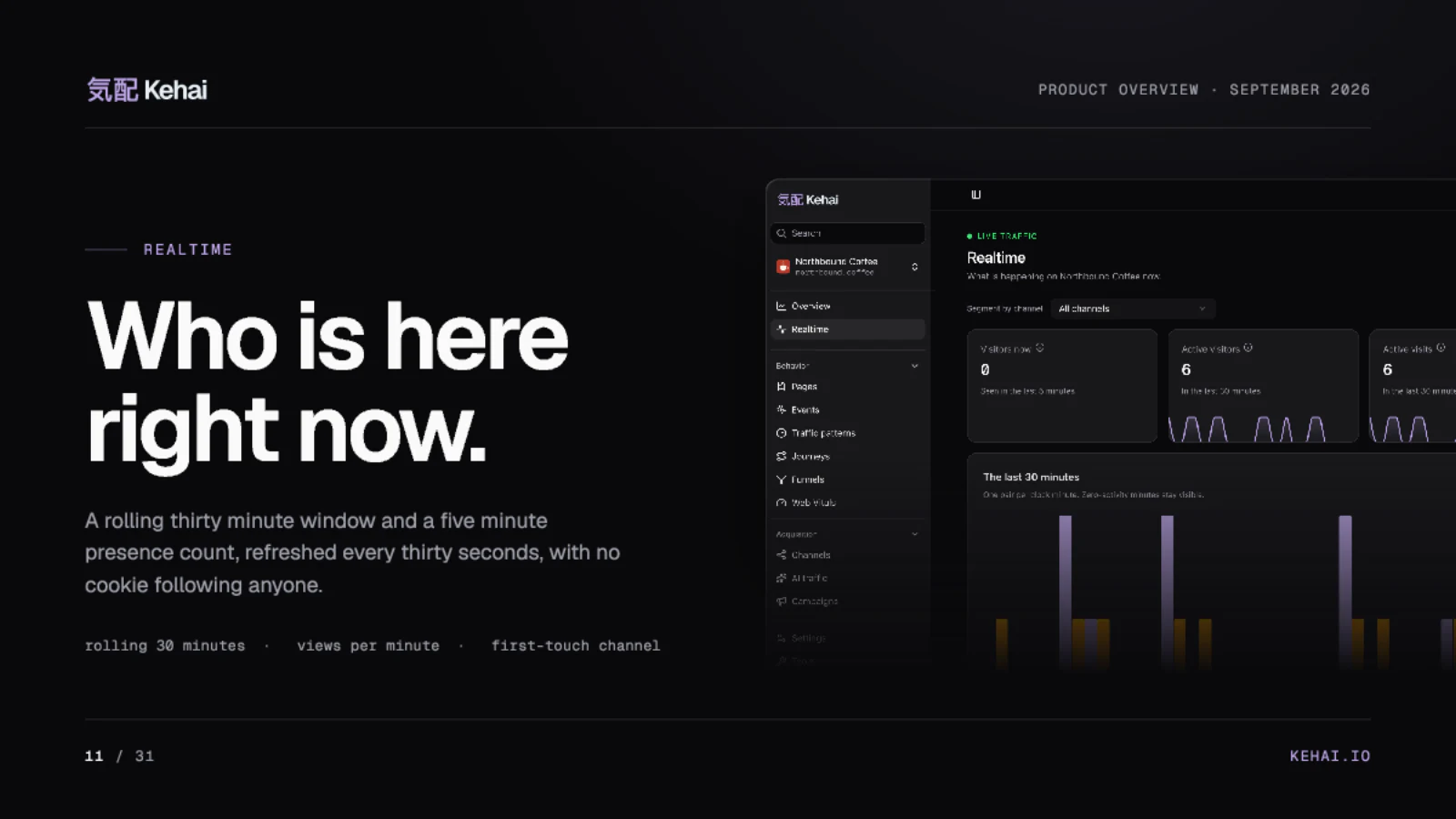
The panel on demo data, cut from the same captures the film was made of. Nothing in them is a customer. Each picture is 1600 pixels wide here and 2400 in the archive; the captions are a suggestion, the figures are a generated shop.
05
The film
A ninety-second tour of the panel. Recorded on demo data. Nothing in it is a customer. Embed it, cut it, or take frames from it; the poster is the frame the homepage shows before play. To link to the film rather than carry it, point at the homepage's film section.
06
The deck
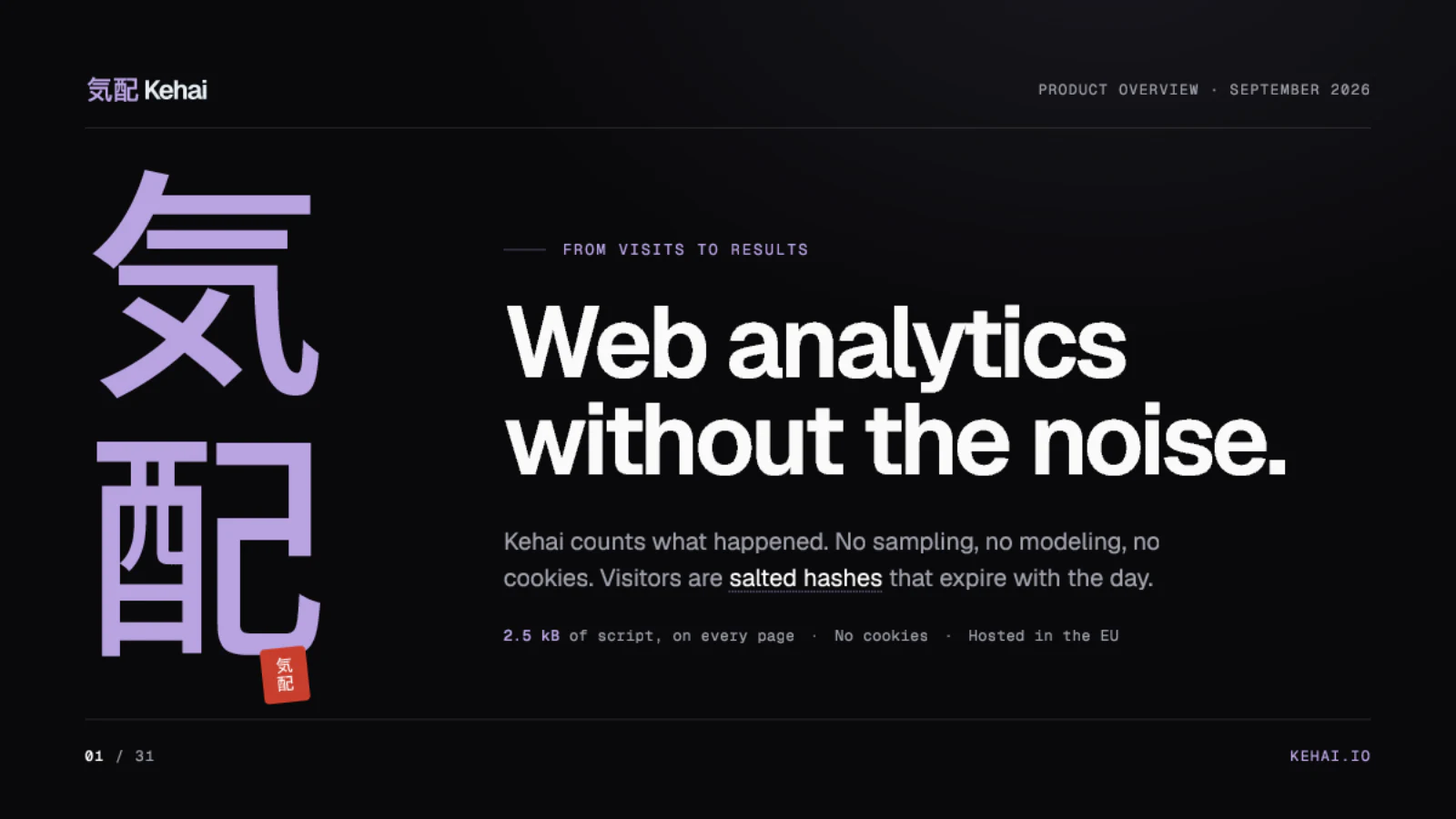
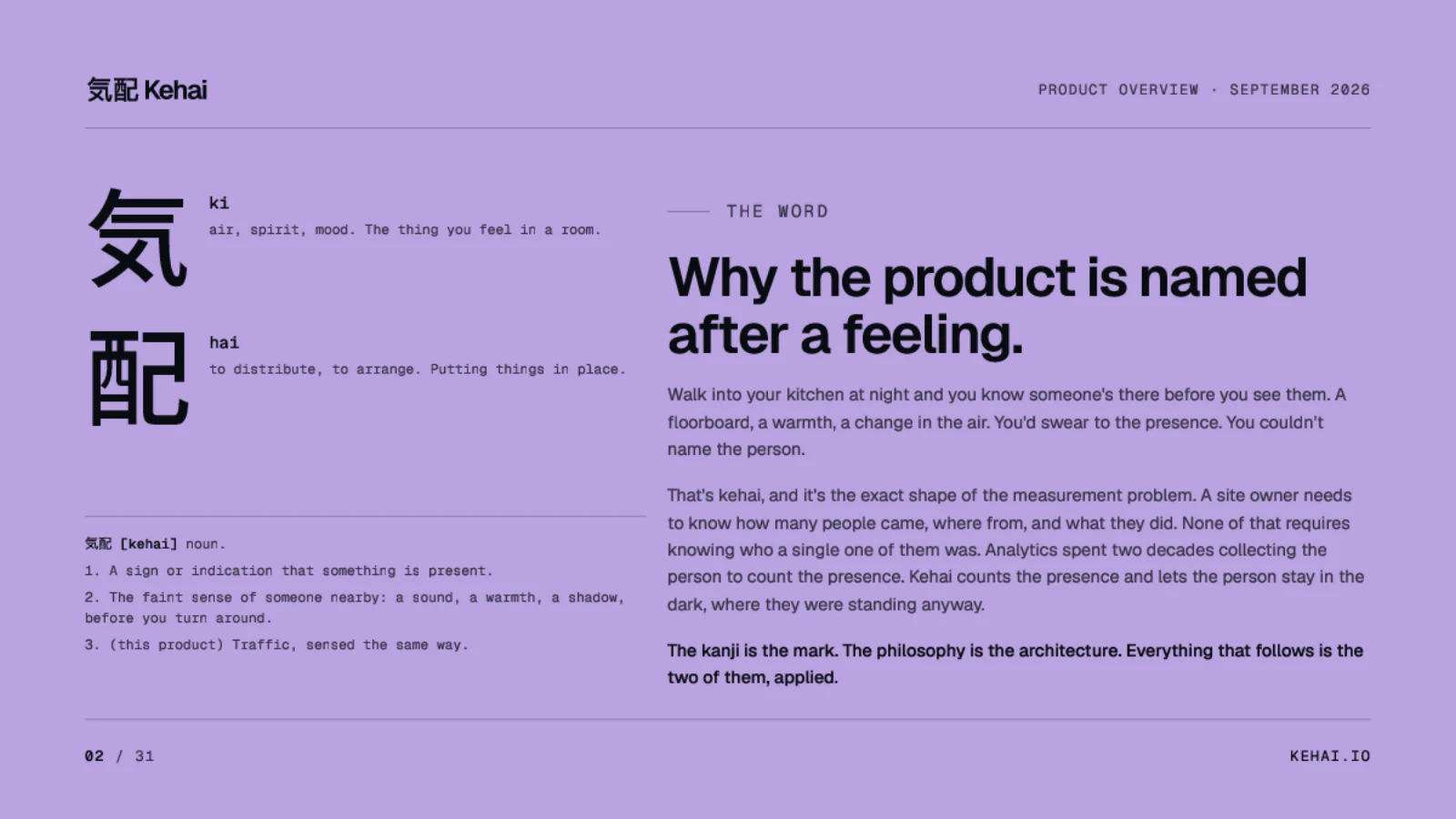
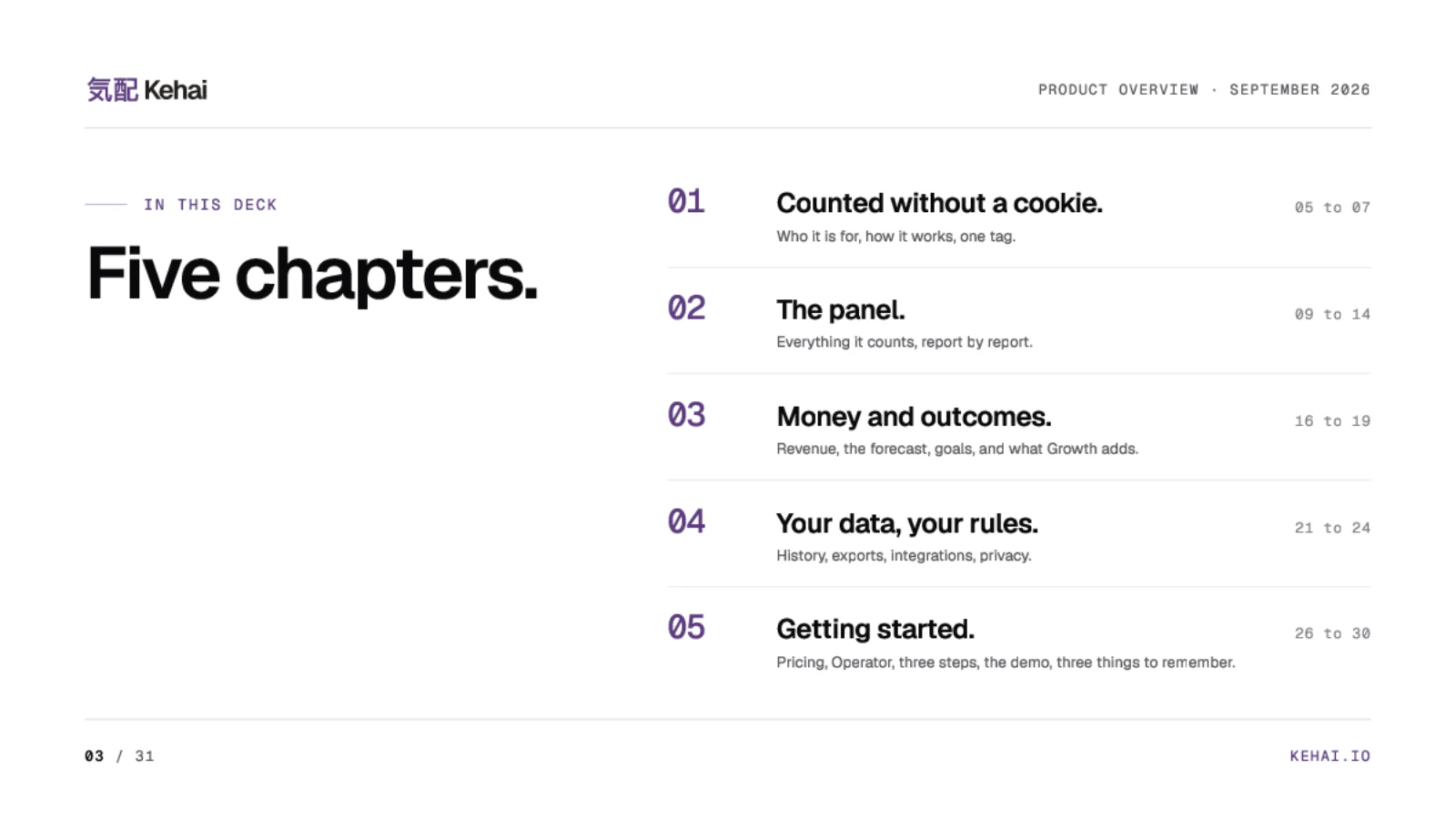
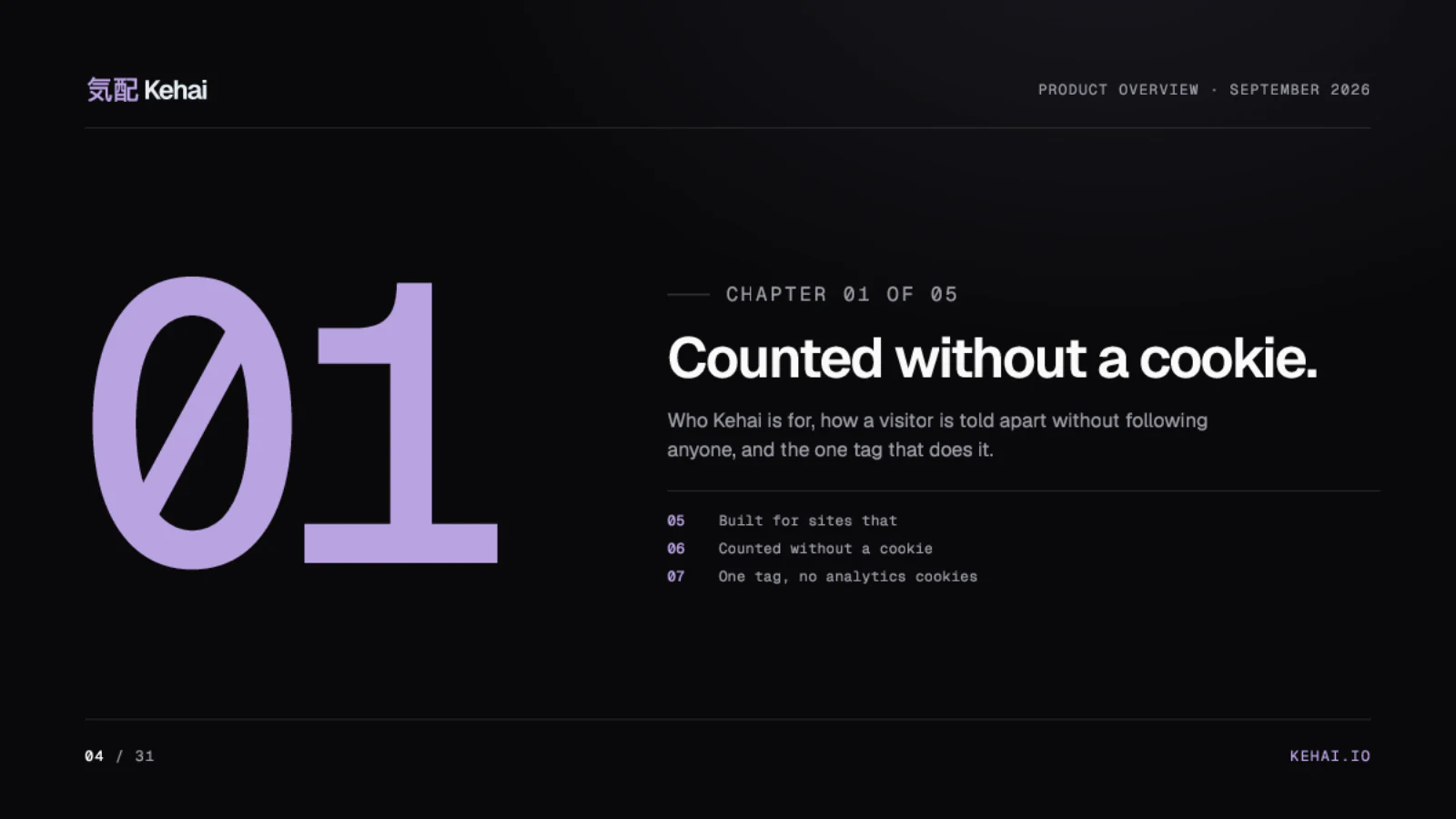
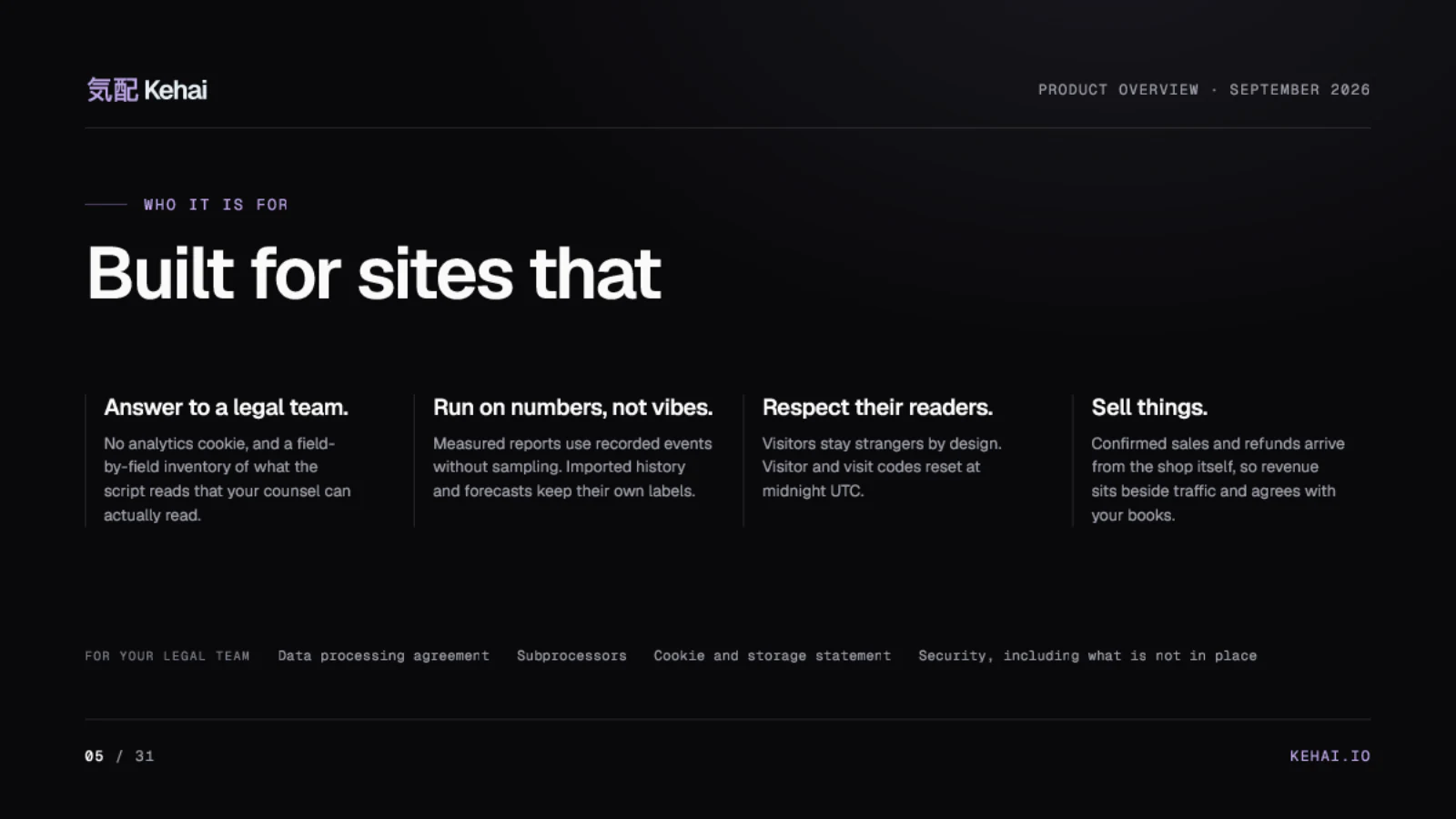
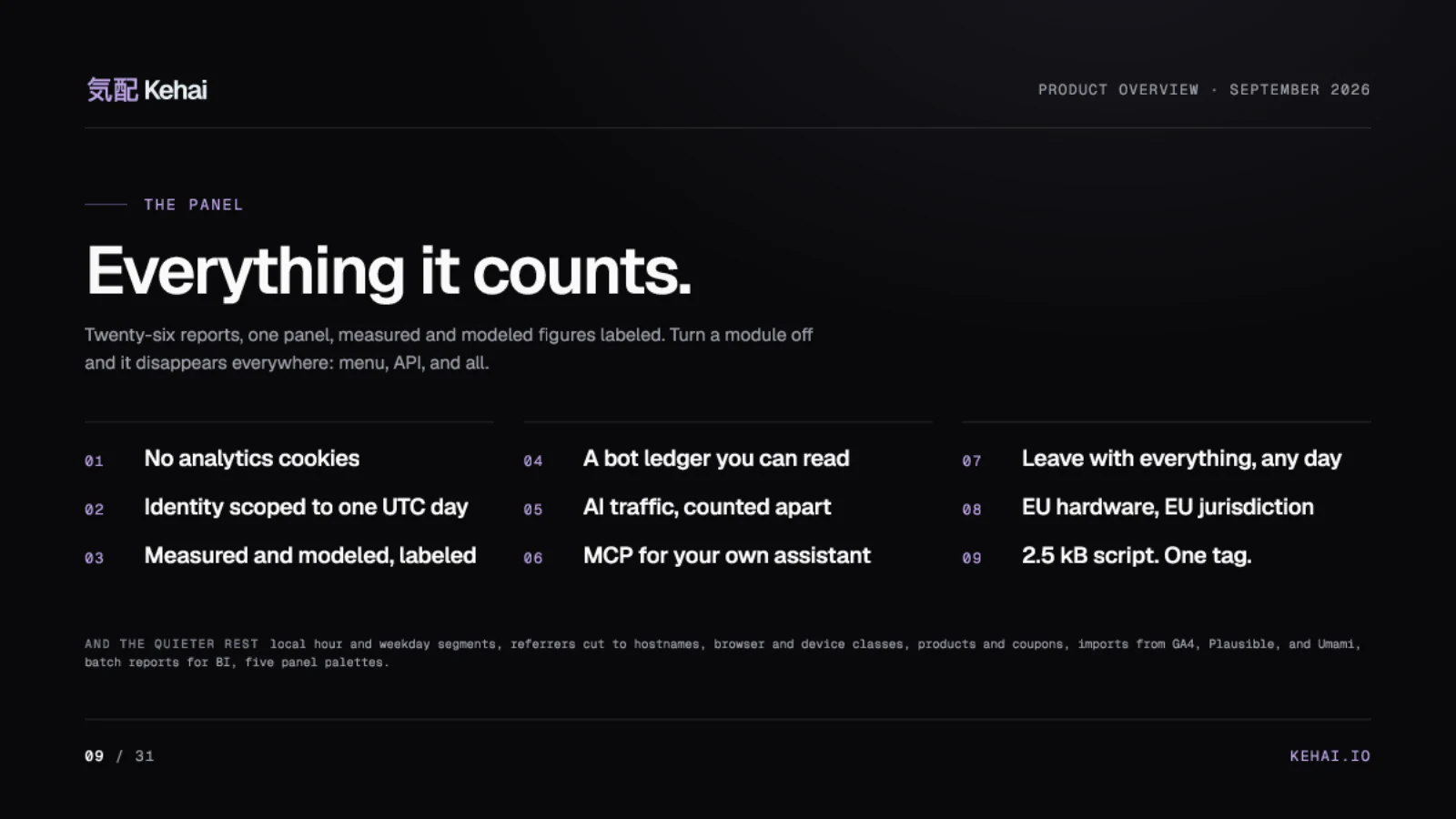
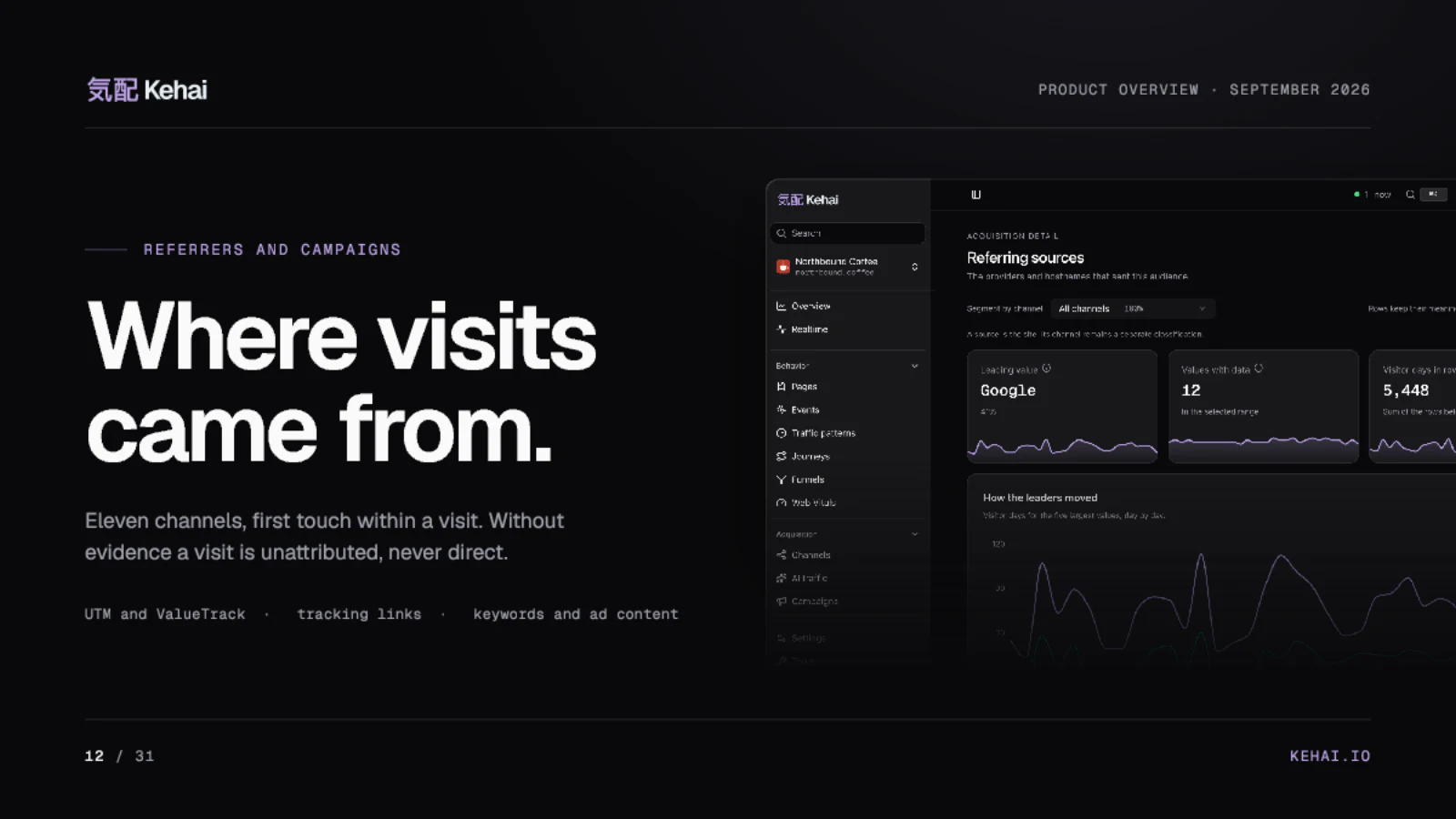
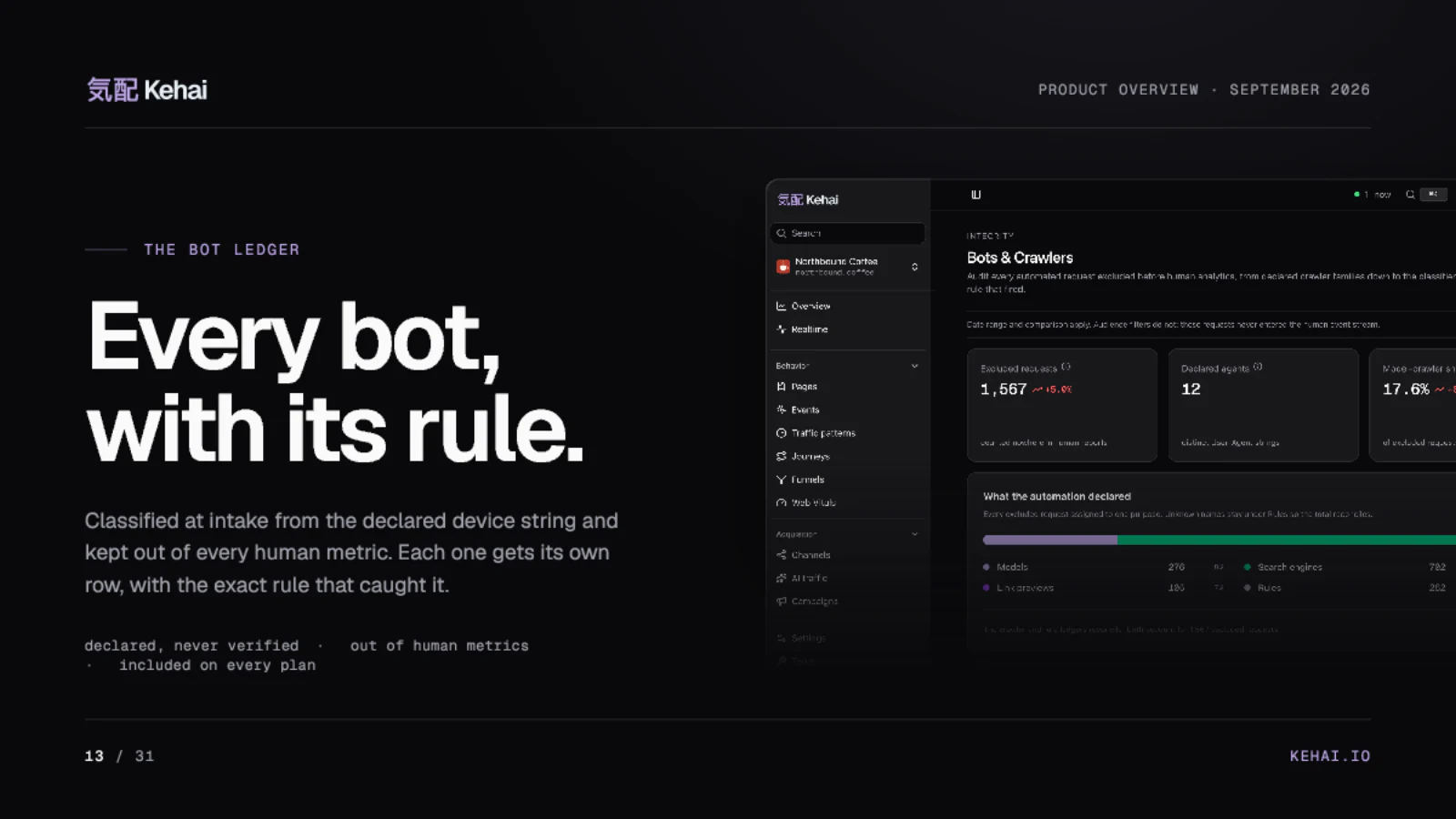
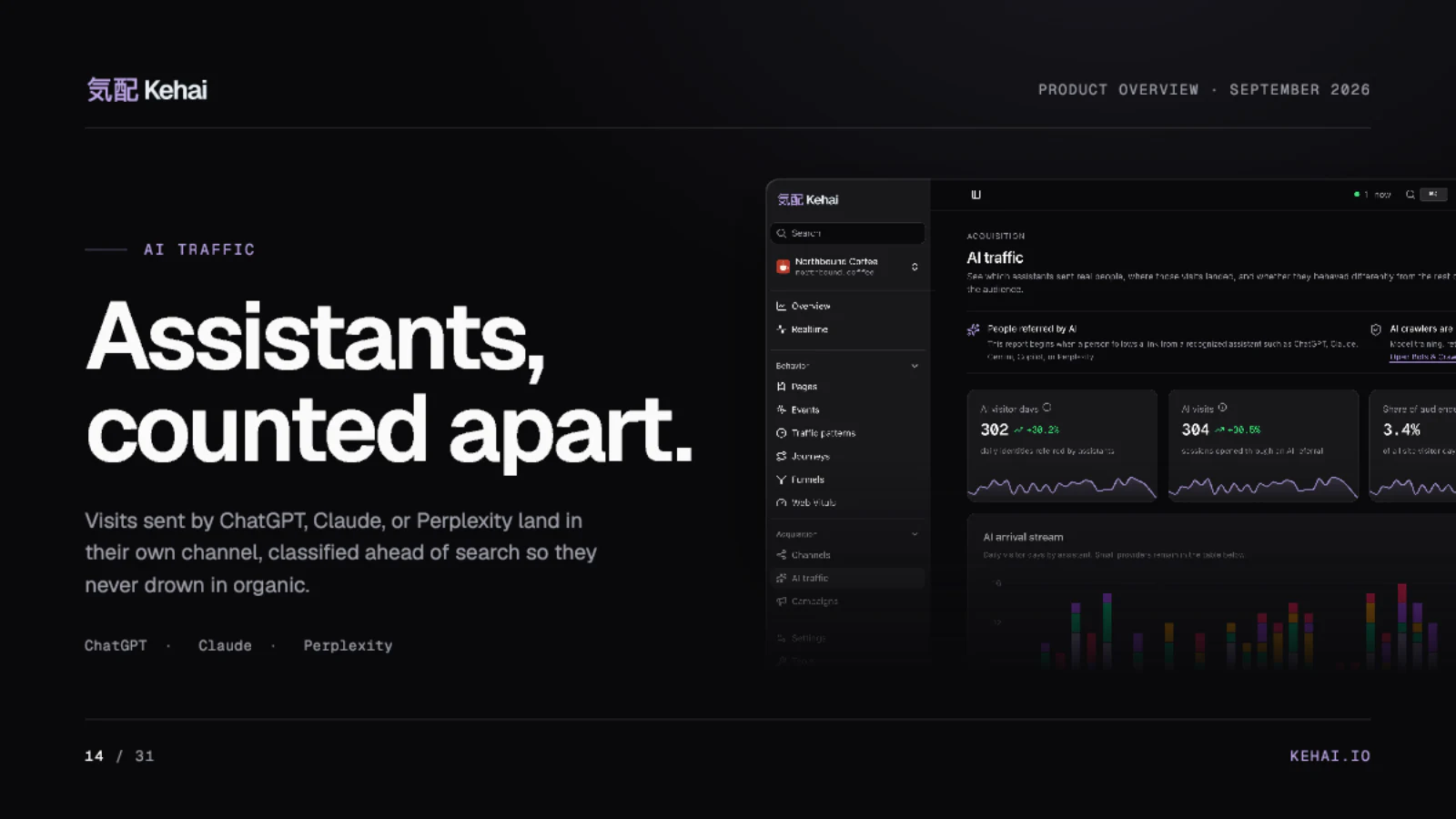
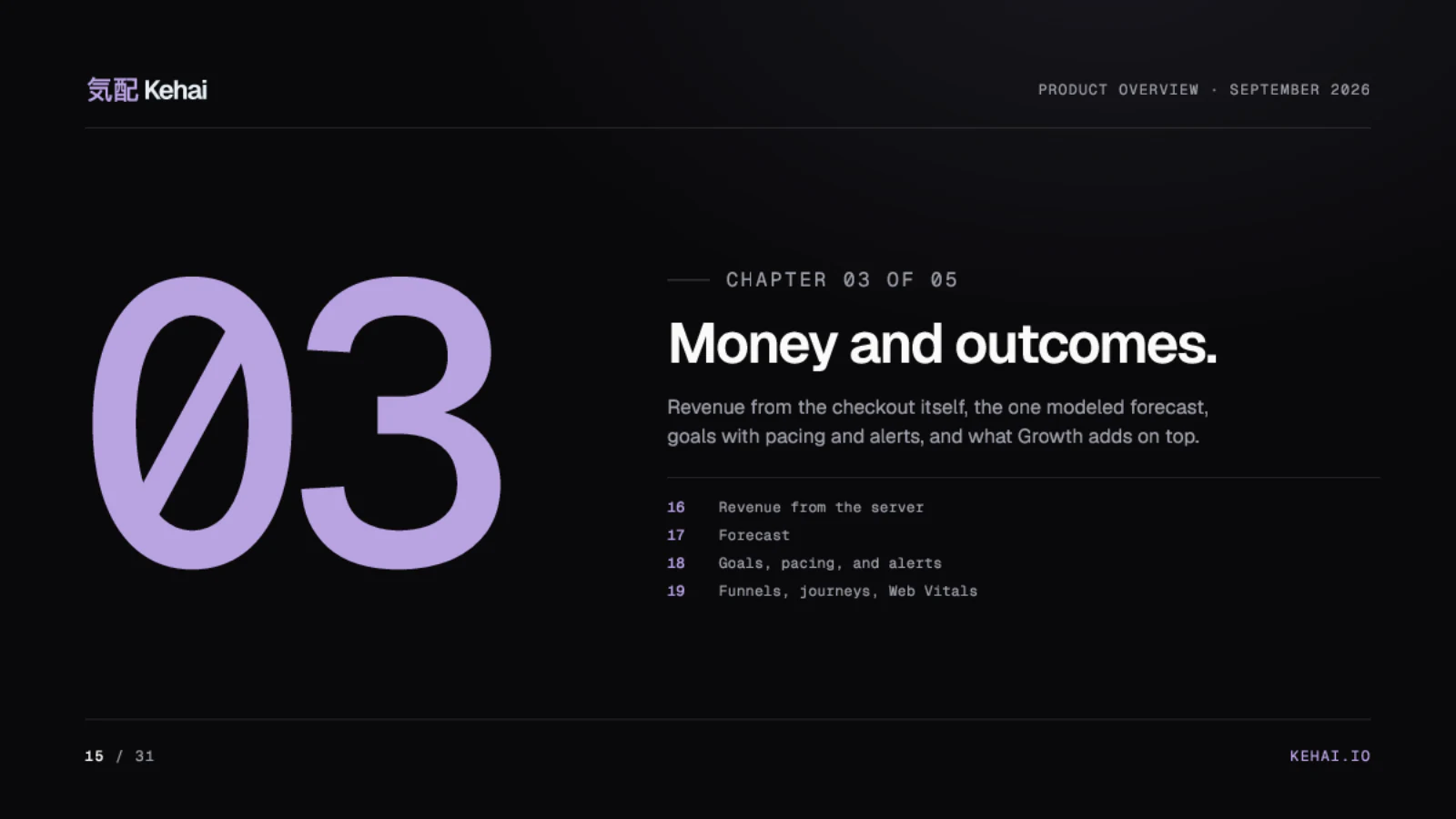
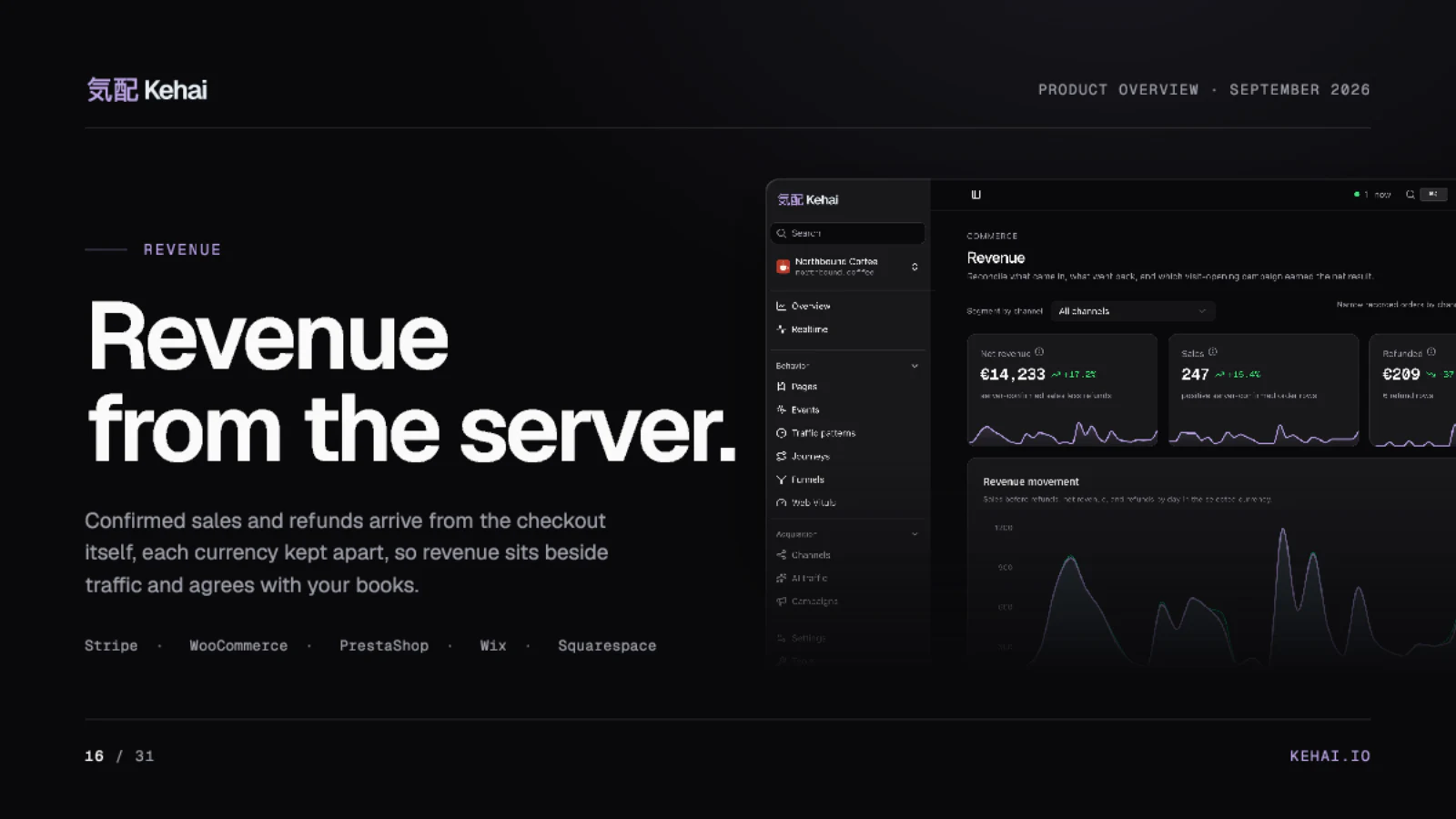
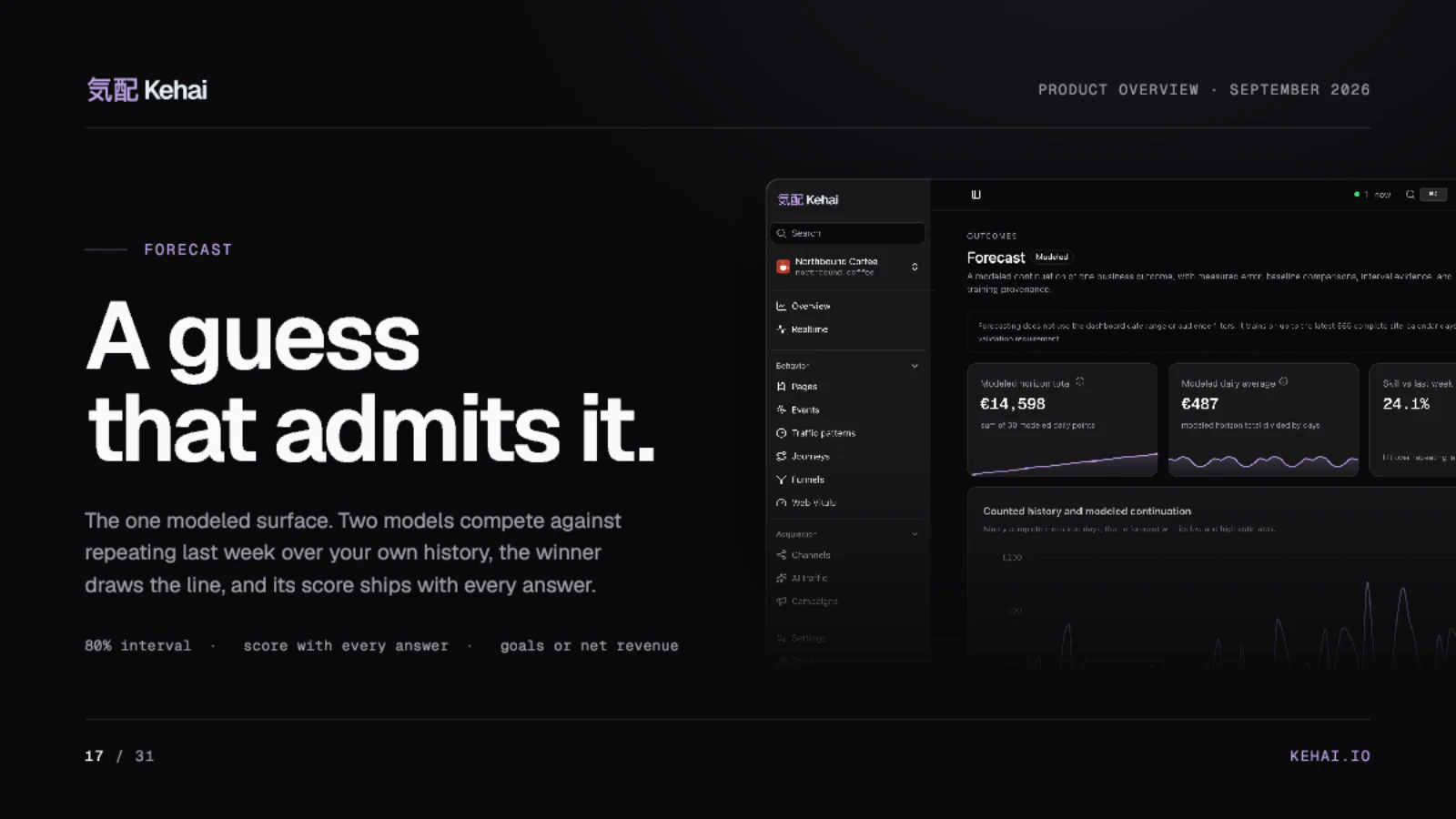
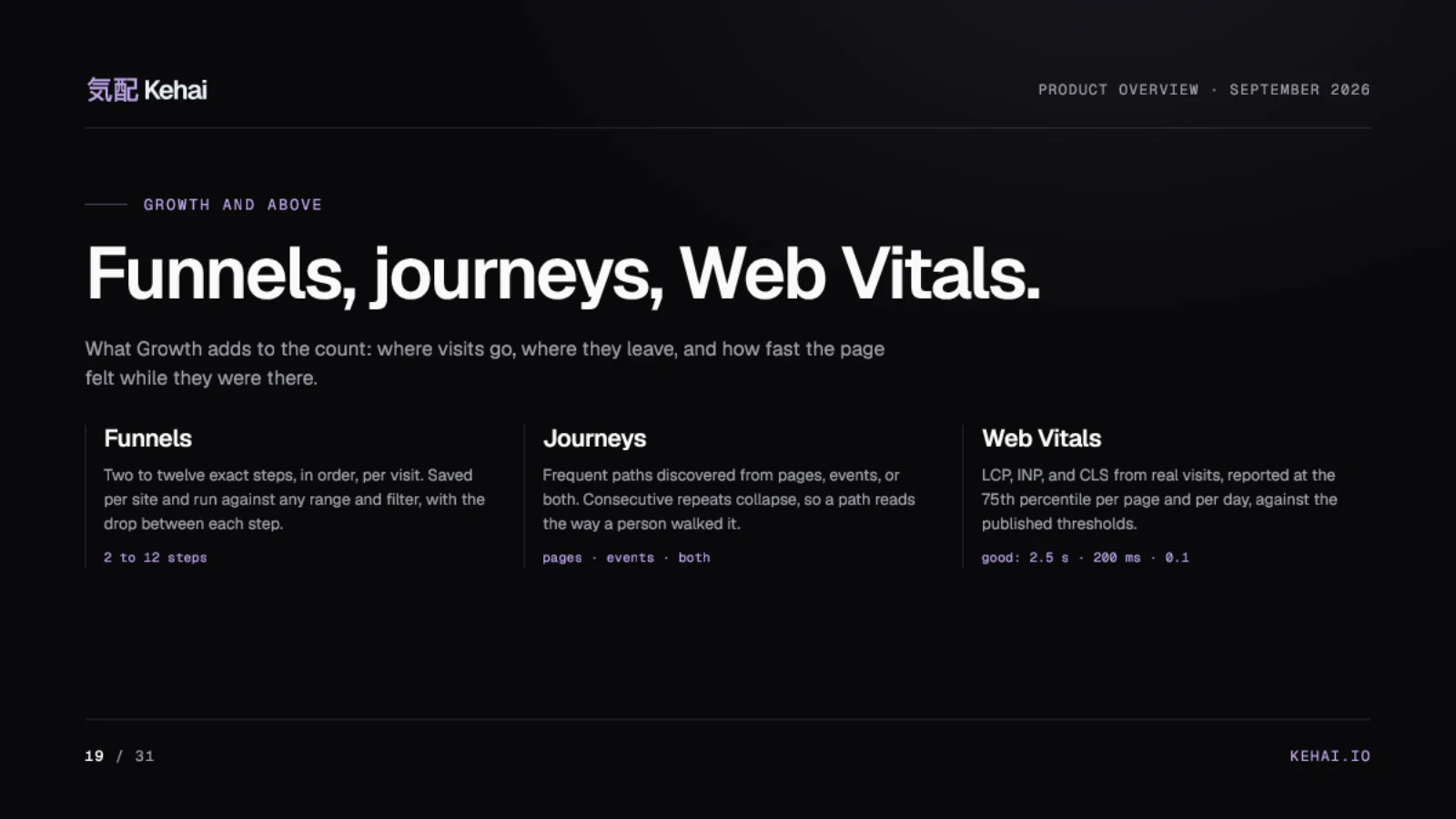
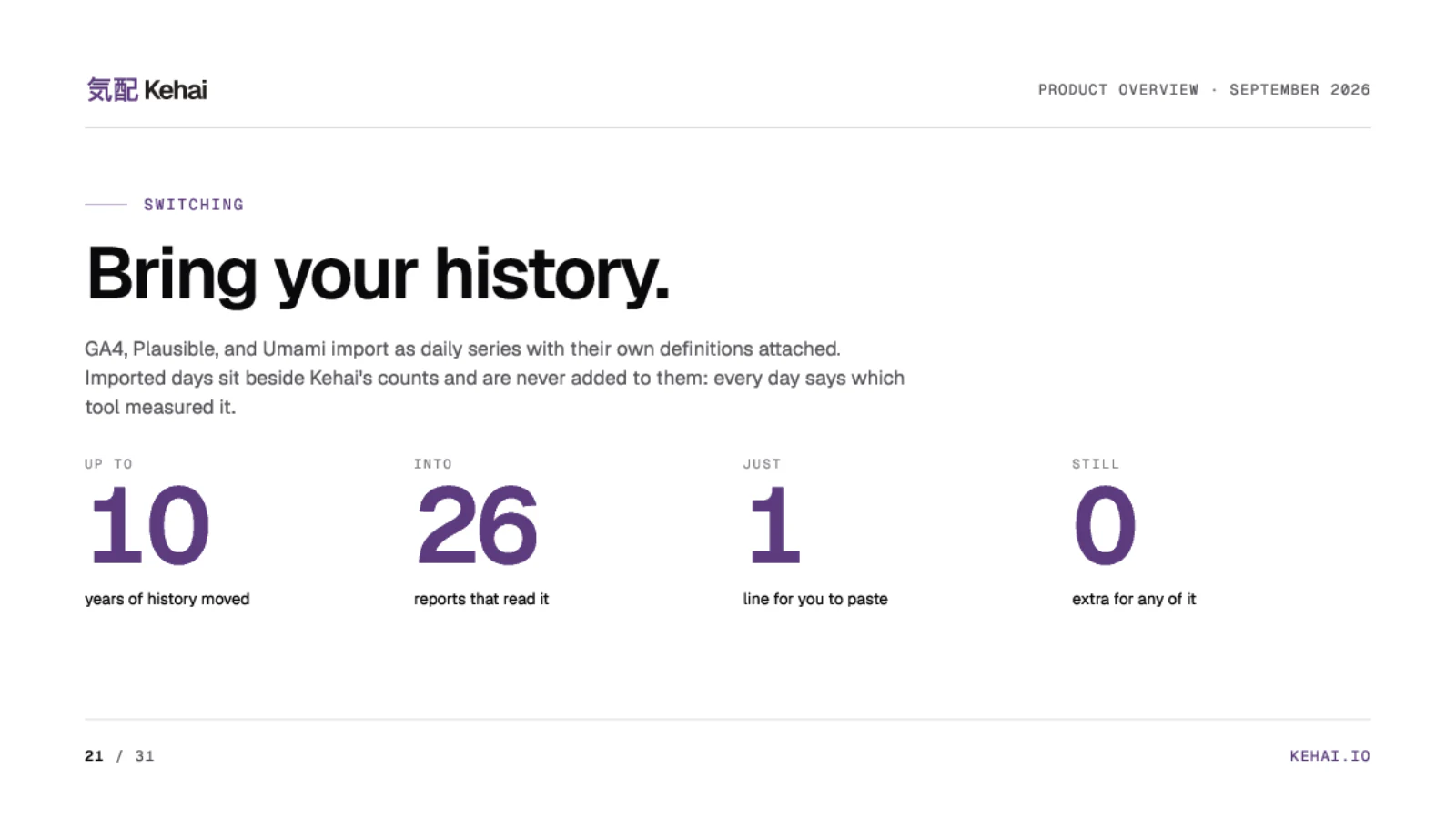
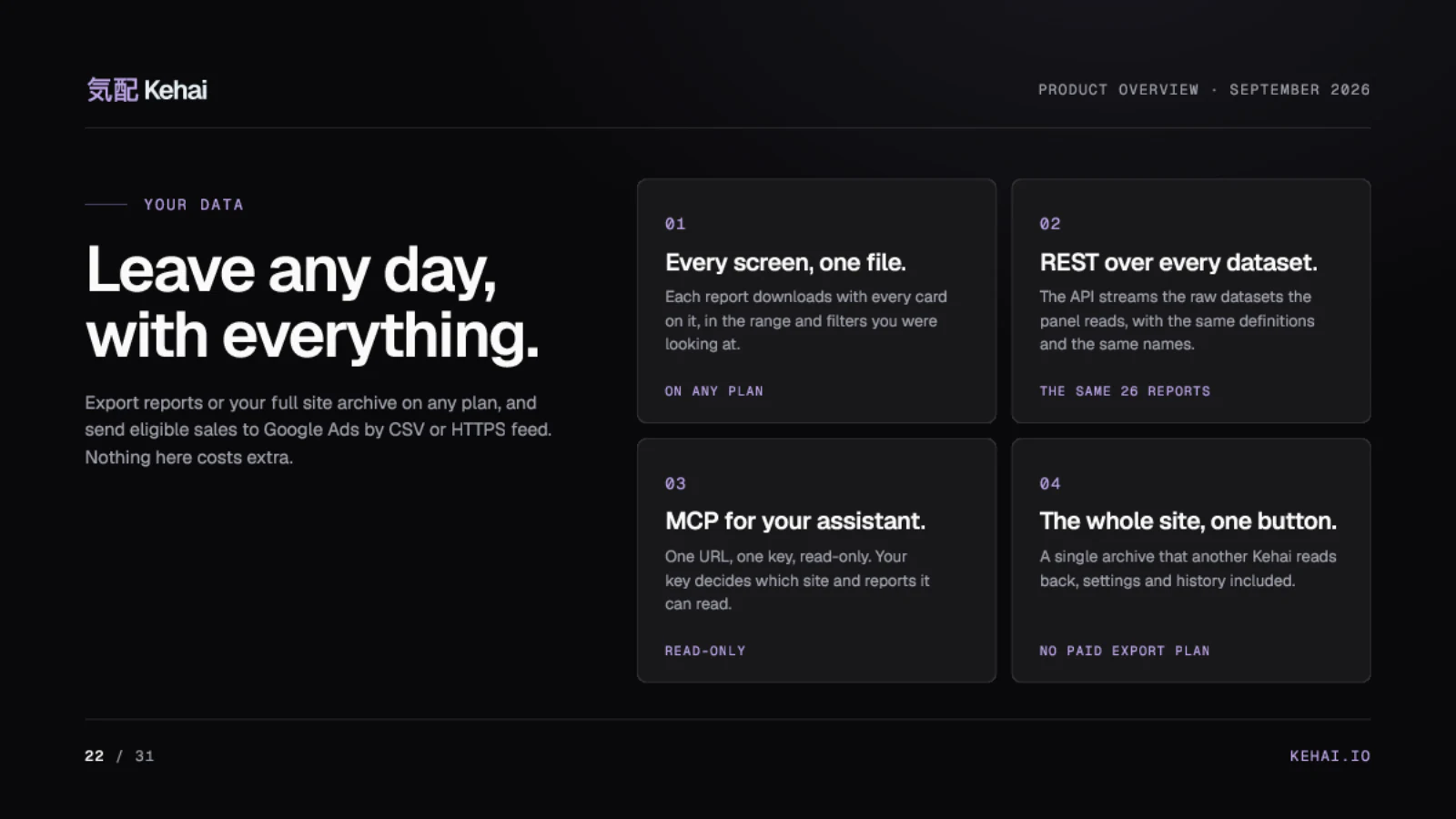
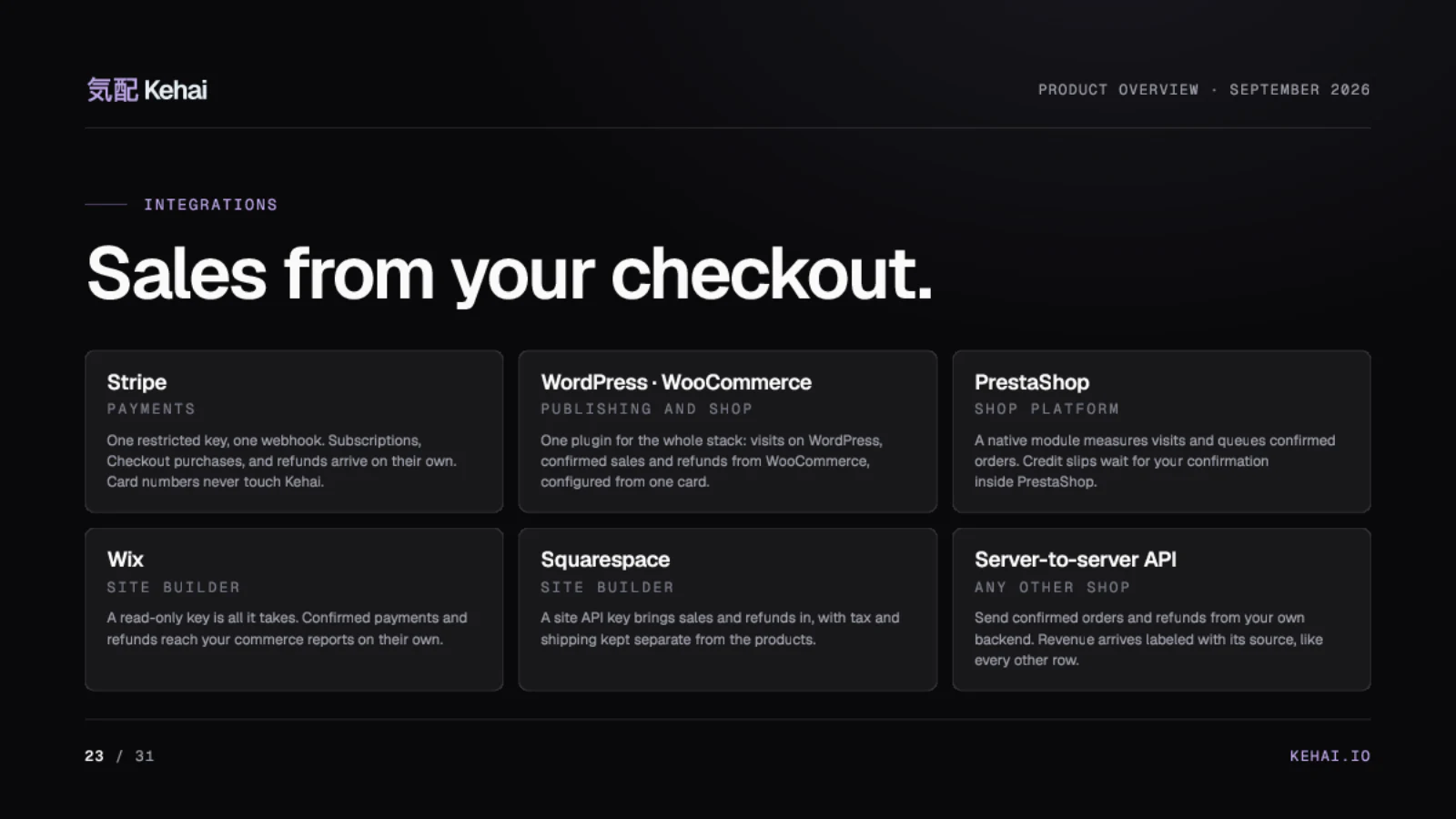
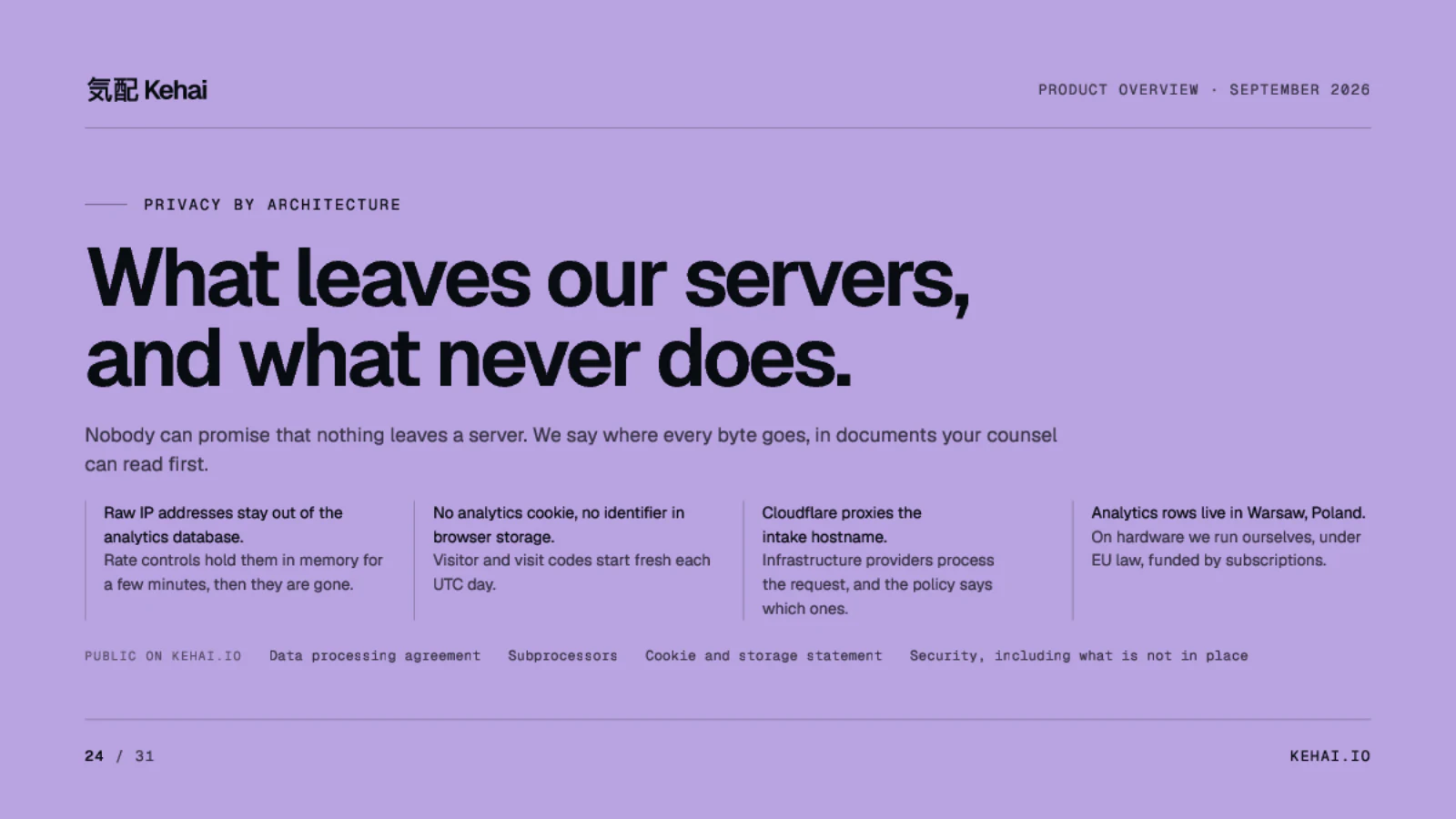
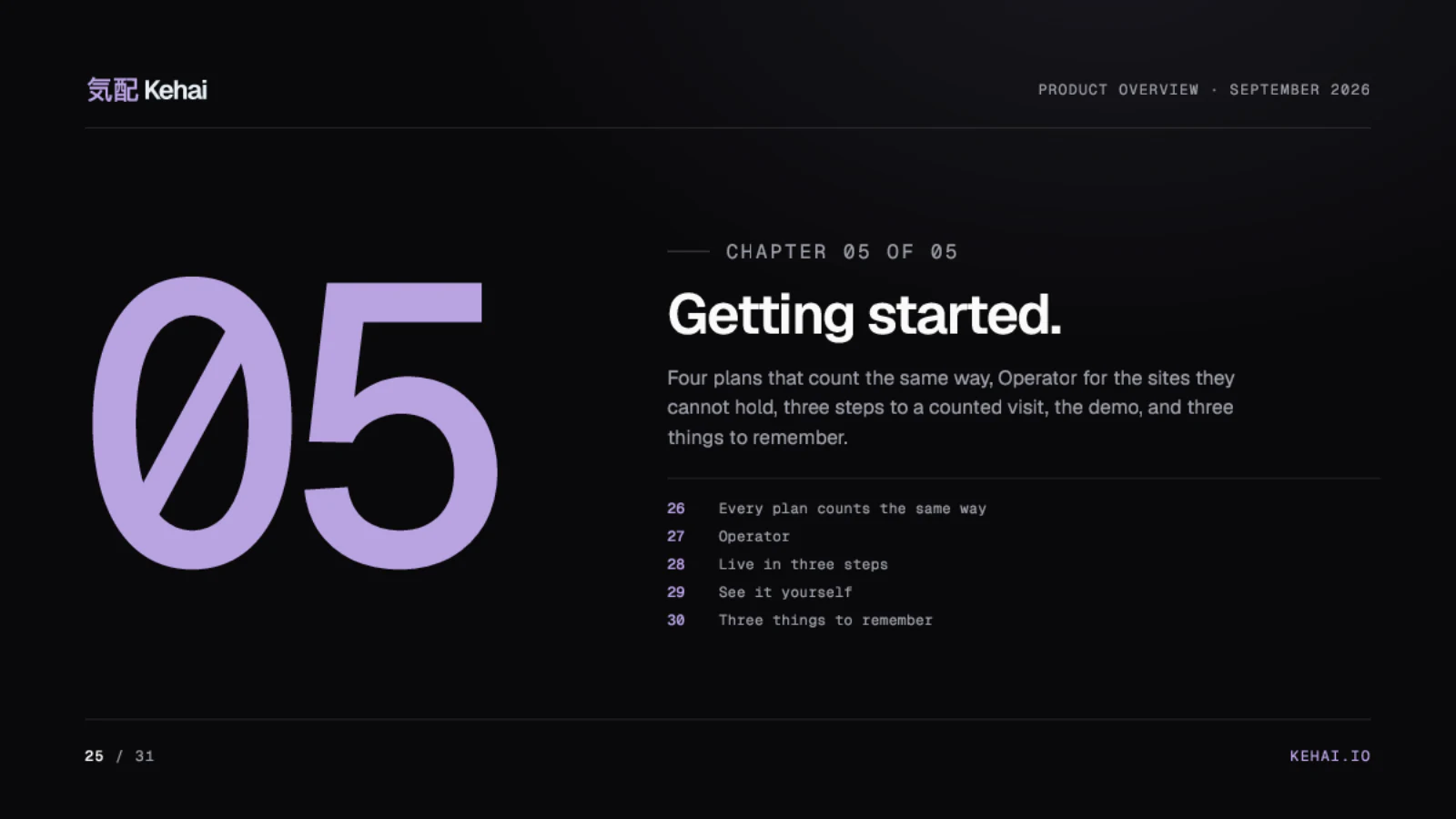
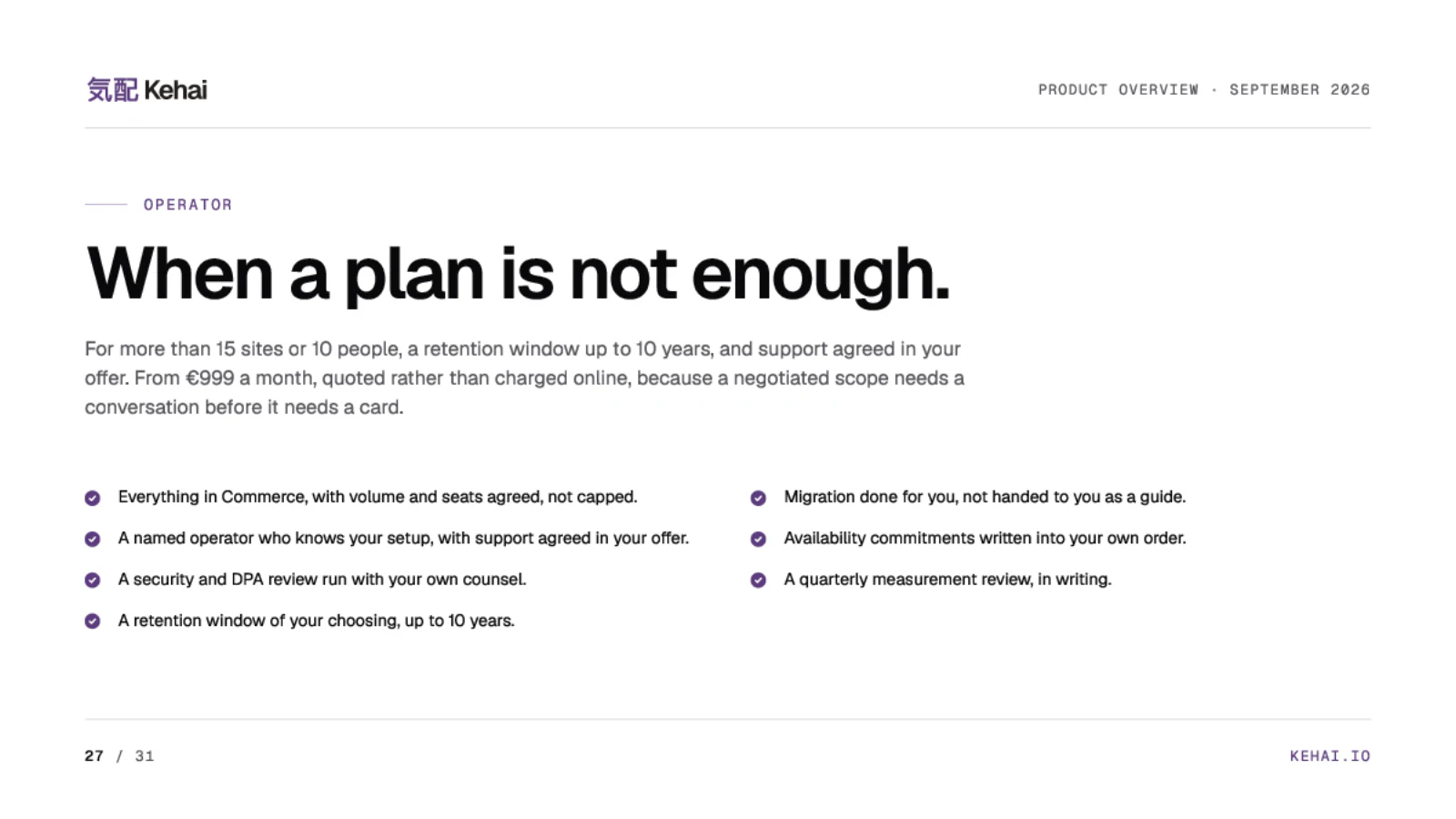
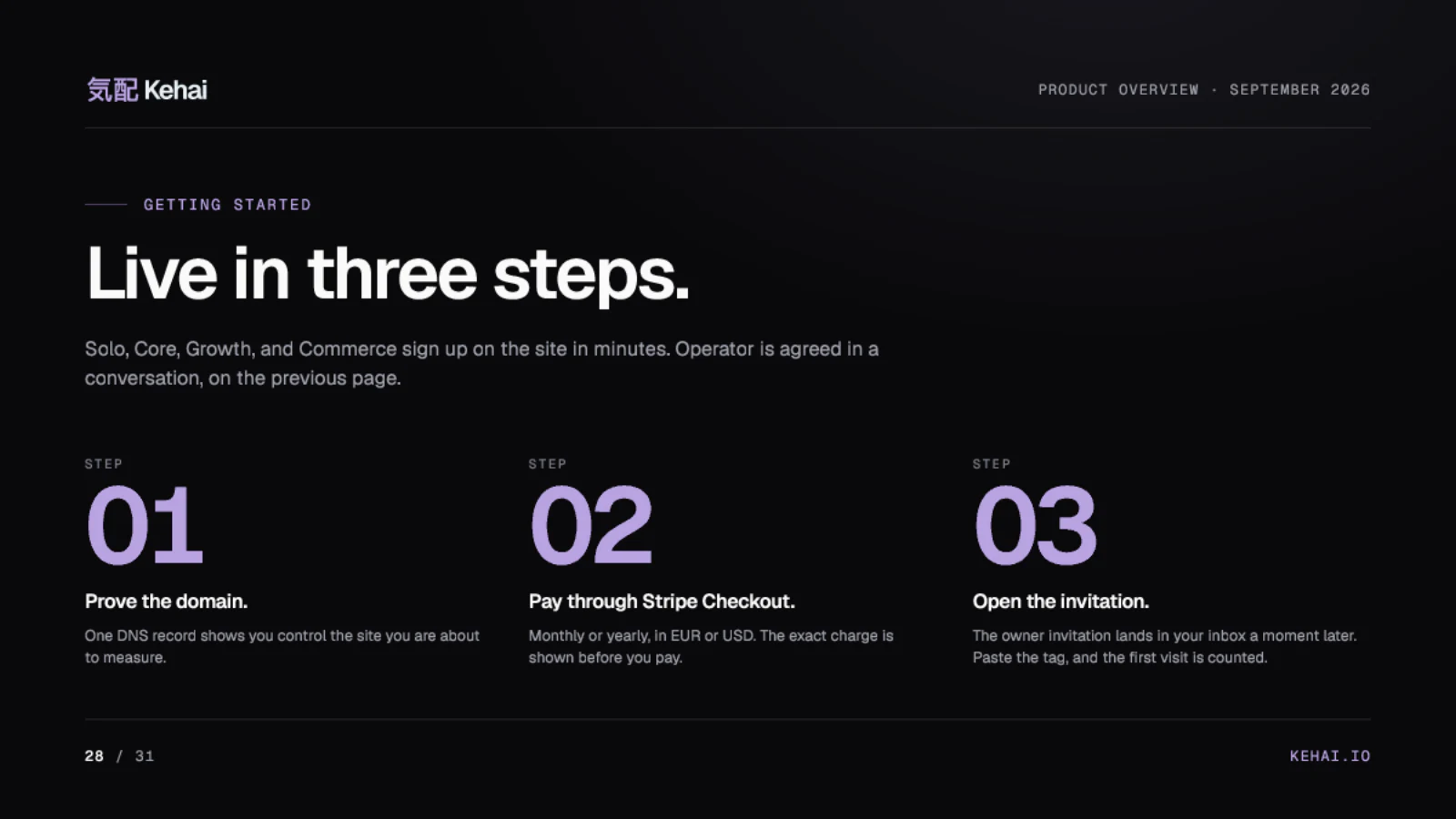
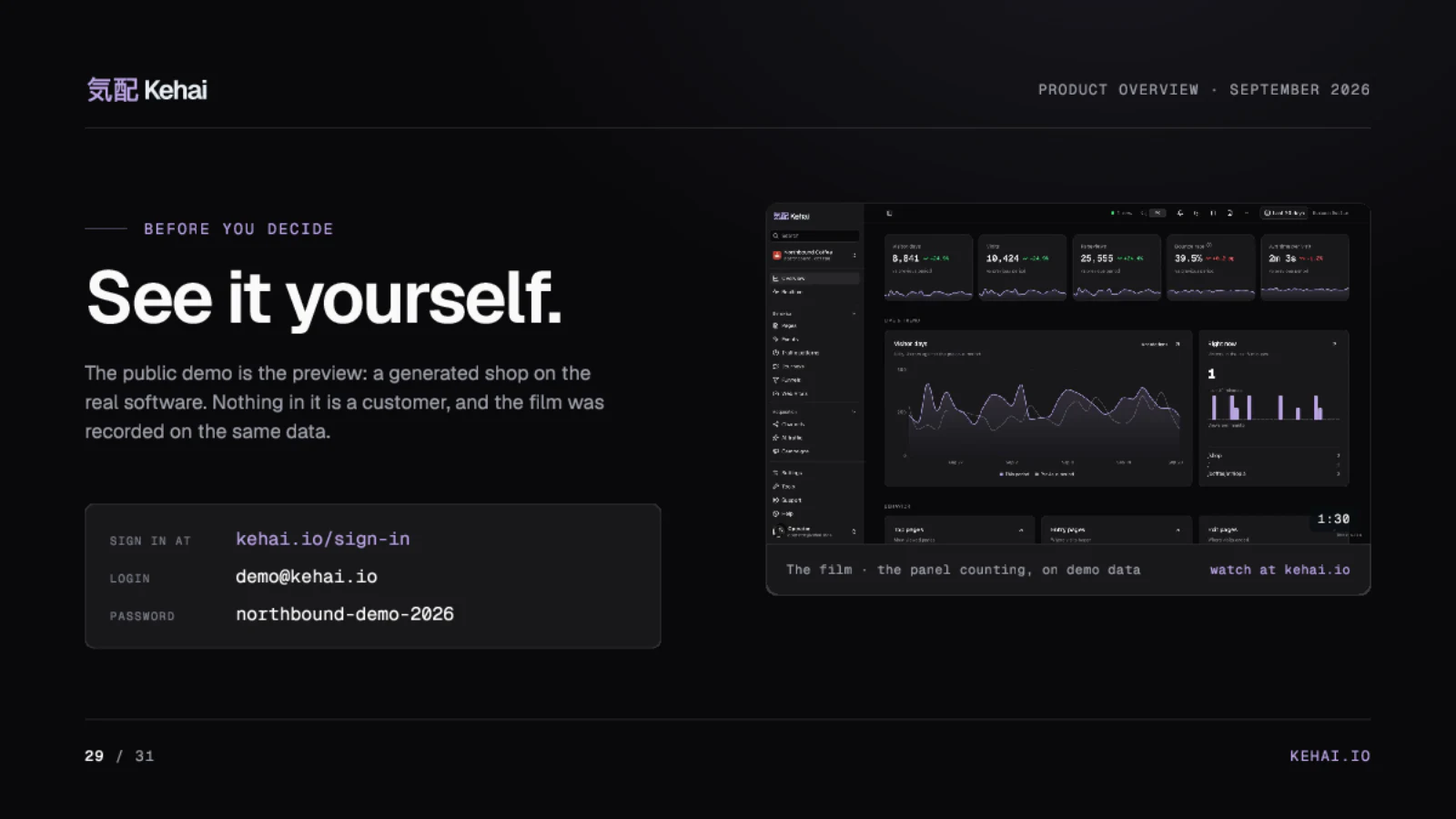
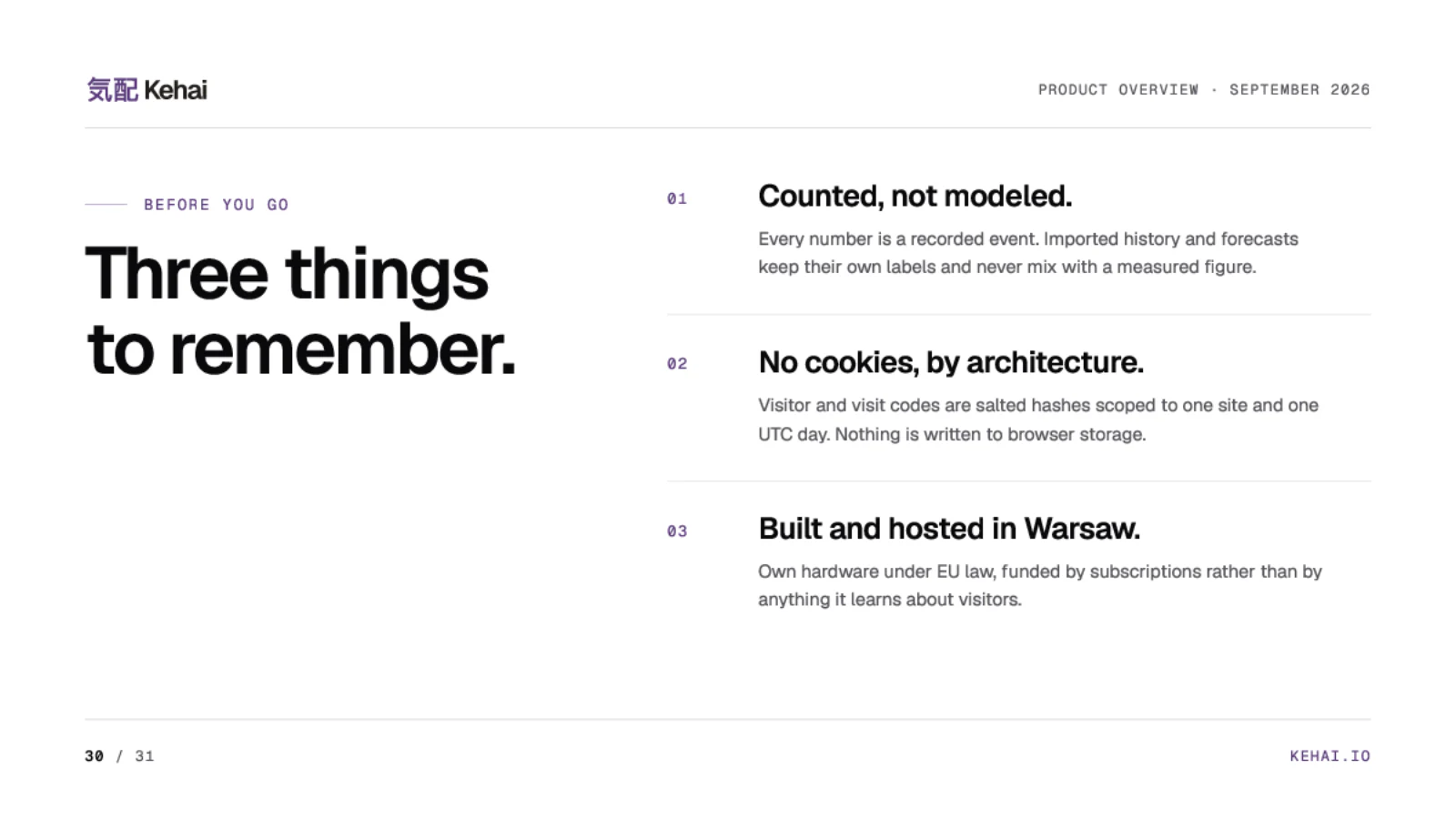
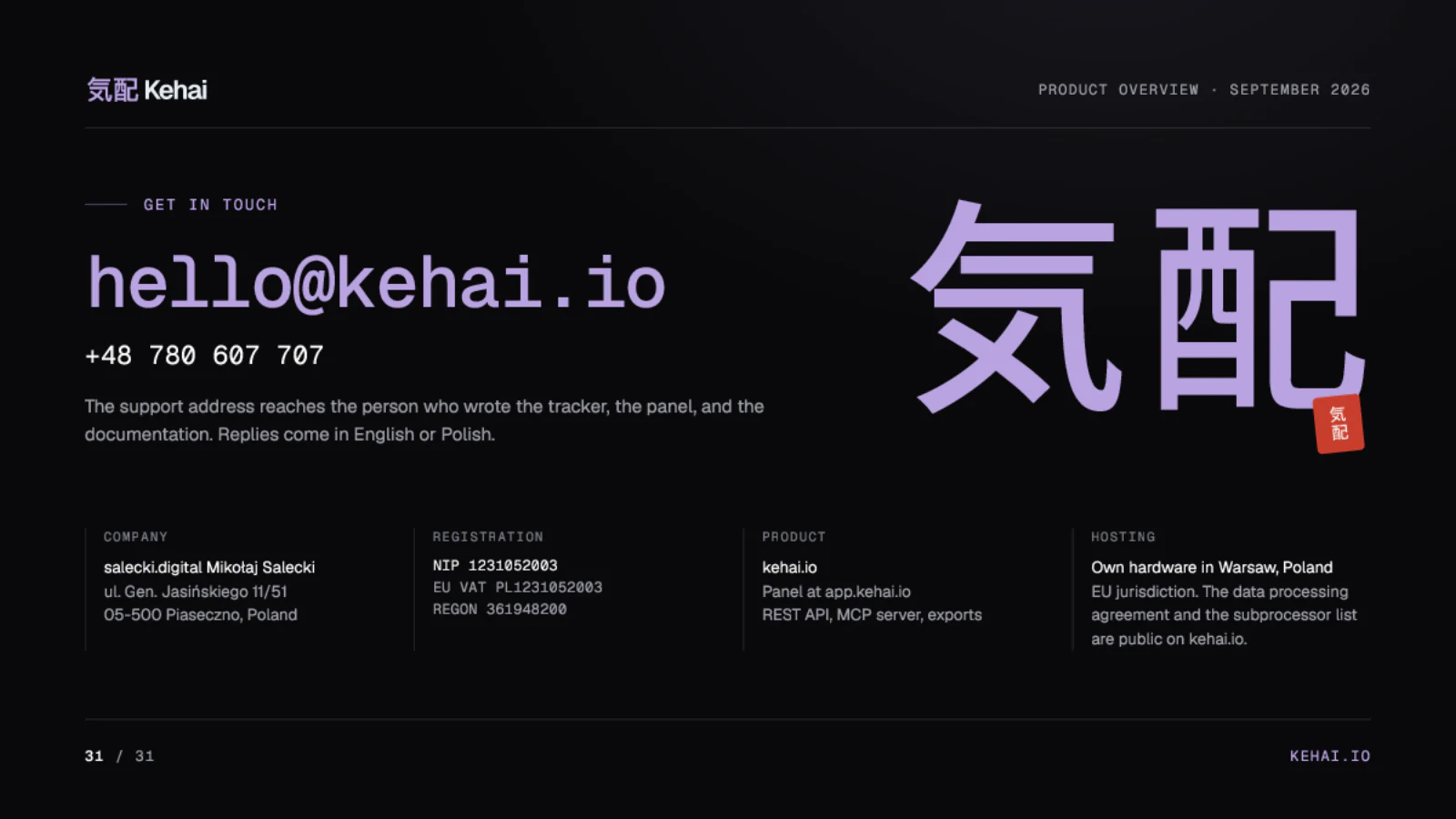
The product overview in 31 pages: what Kehai counts, the panel, money and outcomes, the data, and how to start. Scroll it sideways here, or read the same pages as a PDF. Prices in it are printed from the price book on the date on the cover.

07
Press contact
Questions, an interview, or a fact this page does not answer: hello@kehai.io, and the reply comes from the founder. Quoting up to roughly 150 words with attribution and a link needs no permission; republishing a page in full does. The logo and the rules for using it are on the brand page, the company on the about page.